






Veteran Expertise Ignites
Bharath Space Vehicle (BSV), a burgeoning startup in Surat, is at the forefront of India's private space race, spearheaded by a team of seasoned professionals
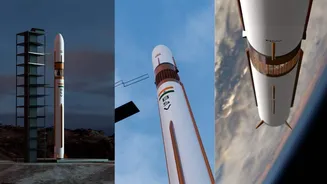
formerly with the Indian Space Research Organization (ISRO). These scientists bring over seven decades of combined experience, aiming to develop the Agasthya-1, a state-of-the-art liquid-fueled rocket. Standing at 28 meters, this new launch vehicle is engineered to ferry payloads of up to 500kg into Earth's orbit, marking a significant stride in indigenous launch capabilities. The collective knowledge within BSV positions Agasthya-1 as one of the most promising private space ventures in the nation, built on a foundation of unparalleled experience in space exploration and technology.
Agasthya-1 Design & Capabilities
The Agasthya-1 rocket is meticulously designed as a two-stage, expendable launch system, powered by two liquid oxygen and kerosene (LOX/RP-1) engines. This configuration is crafted to deliver dependable and economical access to space, specifically targeting the burgeoning small-satellite market. Its capacity allows for the deployment of 500kg payloads into Sun-Synchronous Polar Orbits (SSPO) and 800kg into low-inclination low-Earth orbits (LEO) at an approximate altitude of 400km. This dual-orbit capability enhances its versatility, making it suitable for a wide array of satellite missions.
Liquid Engines: A Game Changer
A key differentiator for Agasthya-1, setting it apart from many other Indian small-satellite rockets, including ISRO's own SSLV, is its choice of a liquid bipropellant engine. Unlike rockets that rely on solid propellants, this liquid engine approach allows for comprehensive pre-launch testing. BSV's 'fly-what-you-test' philosophy means that both the first and second stage engines undergo rigorous hot-fire acceptance tests on the ground. This thorough validation process dramatically diminishes the potential for in-flight anomalies, boosting mission reliability and success rates, a crucial factor in the competitive satellite launch industry.
24-Hour Launch Readiness
The adoption of liquid engines not only enhances reliability but also empowers BSV with the extraordinary capability of achieving launch readiness within a mere 24 hours of notification. This rapid deployment capacity is increasingly vital for operators of satellites used in defense and disaster response, where timely data acquisition can be critical. The founding team, including Dr. N. Vedachalam, a former Director of ISRO's Liquid Propulsion Systems Centre (LPSC) who was instrumental in developing the cryogenic upper stage for the Geosynchronous Launch Vehicle (GSLV), brings this advanced operational agility to the table, leveraging extensive experience that continues to benefit national security and space programs.
Gujarat Coastal Launch Site
To support its ambitious launch plans, BSV has proposed the development of a dedicated launch complex situated near Kodinar in Gujarat's Gir Somnath district. This strategic coastal location offers significant advantages, including direct access to open sea and favorable launch corridors, which are essential for achieving specialized satellite trajectories. Should this proposal gain approval, it would establish India's first orbital launch facility on the west coast. Such a development would diversify the nation's launch infrastructure, reducing the current reliance on a single primary spaceport and enhancing overall launch flexibility and capacity.