



RAVEN's Astronomical Breakthrough
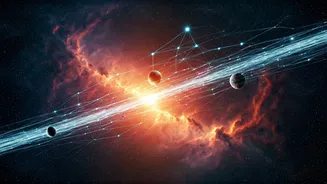
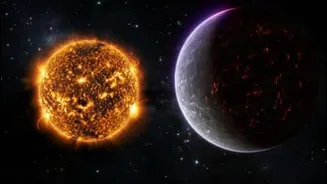
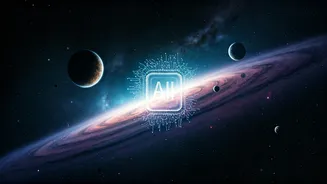
Astronomers have achieved a remarkable feat by leveraging an artificial intelligence system named RAVEN to identify more than 100 previously unknown exoplanets.
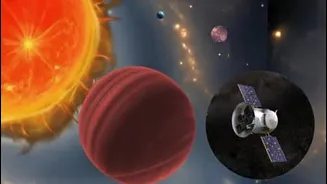
This incredible discovery was made possible through the meticulous examination of data collected by NASA's Transiting Exoplanet Survey Satellite (TESS). Beyond these confirmed finds, RAVEN also flagged an additional 2,000 potential planetary candidates. If validated, this would dramatically increase the number of known exoplanets, which currently stands at approximately 6,000. The RAVEN system was developed at the University of Warwick and systematically sifted through the observational records of over 2.2 million stars, with a particular focus on those planets that complete an orbit around their host star in a short period of just 16 days. This concentrated search within specific orbital parameters likely contributed to the high number of discoveries.
AI-Powered Planetary Insights
The significance of RAVEN's work extends far beyond simply cataloging new celestial bodies; it has the potential to profoundly alter our comprehension of the universe. This AI is not merely a data-processing tool; it ingeniously combines advanced signal detection methodologies with sophisticated machine learning algorithms. This powerful synergy allows RAVEN to distinguish genuine exoplanet signals from the vast amount of noise and false positives present in astronomical datasets. The findings derived from RAVEN's analysis are particularly illuminating. They suggest that a substantial portion of stars similar to our Sun host planets in close orbits, with approximately one in ten such stars exhibiting this characteristic. Furthermore, the research sheds light on the rare occurrence of Neptune-sized planets within the 'Neptunian desert,' a region of extremely close proximity to the star where such planets are seldom found, accounting for only about 0.08%. This advanced application of AI in space research marks a significant stride forward and holds immense promise for future explorations and discoveries about extraterrestrial worlds.