







Mighty Return Announced
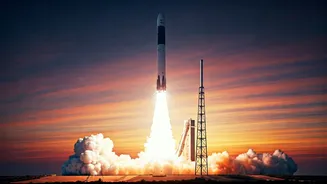
SpaceX is set to reignite the skies with the first launch of its exceptionally powerful Falcon Heavy rocket in a span of eighteen months. This significant
event is scheduled to take place from NASA's renowned Kennedy Space Center, situated in Florida, on April 27. The launch window for this, the twelfth liftoff of the Falcon Heavy, is an expansive eighty-five minutes, commencing at 10:21 AM Eastern Time, which corresponds to 7:51 PM Indian Standard Time. Should unforeseen circumstances arise, a secondary opportunity for launch is provisionally set for Tuesday, featuring a similar eighty-five-minute window that opens at 10:17 AM ET (7:47 PM IST).
Rocketry Powerhouse
The Falcon Heavy stands as one of the most potent rockets currently in operation, a testament to advanced engineering. Its design ingeniously merges three distinct Falcon 9 boosters, collectively generating an astonishing thrust exceeding five million pounds. This immense power is critical for its capability to transport substantial payloads to geostationary orbits and even farther into space. The upcoming mission represents the rocket's inaugural flight since October 2024, underscoring the importance and anticipation surrounding its comeback into active service after this extended period.
Reusability in Action
Embracing its core philosophy of reusability, SpaceX plans for the Falcon Heavy's two side boosters to execute a controlled landing at Cape Canaveral Space Force Station in Florida. This visually breathtaking maneuver, a hallmark of Falcon Heavy missions, is expected to occur approximately eight minutes post-launch. However, the central booster will be intentionally expended. This decision is necessitated by the extremely demanding trajectory required for the precise deployment of the satellite payload, making recovery of this specific booster unfeasible on this mission.
Satellite Mission Details
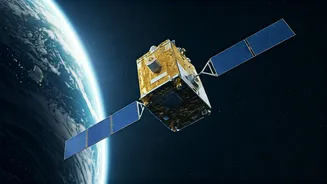
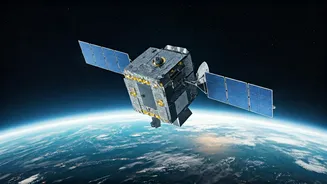
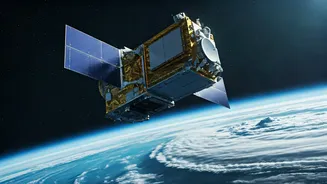
The primary payload for this mission is the ViaSat-3 F3 satellite, which, upon reaching orbit, will become the third satellite in its series to do so. The overarching goal of the ViaSat-3 constellation is to significantly expand high-speed broadband internet coverage, specifically targeting the vast Asia-Pacific region. This initiative aims to bring enhanced connectivity to areas that are currently underserved by existing internet infrastructure, demonstrating the practical applications of such powerful launches. Previous ViaSat-3 satellites, F1 and F2, have also been launched using powerful rockets, with F1 flying on a Falcon Heavy in April 2023 and F2 on a United Launch Alliance Atlas V in November 2025.