



Mission Halted by Helium
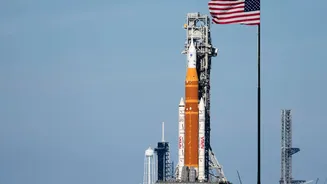
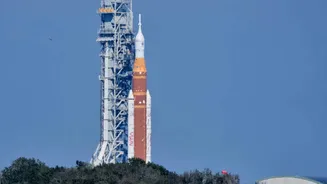
The highly anticipated Artemis II mission, initially slated for a March 6 launch, has been put on hold by NASA. The setback stems from an unexpected helium
flow anomaly that surfaced during a routine inspection. This issue bears a striking resemblance to a problem encountered during the Artemis I mission in 2022, raising concerns about recurring technical challenges. Jared Isaacman, a prominent figure associated with the mission updates, confirmed that the helium flow issue is indeed the reason for the delay. The discovery necessitates a halt in preparations, pushing back the planned voyage of astronauts around the Moon. Engineers are now working diligently to pinpoint the exact cause of this interruption, which could significantly affect the mission's timeline and future space exploration endeavors planned by the agency.
Investigating the Root Cause
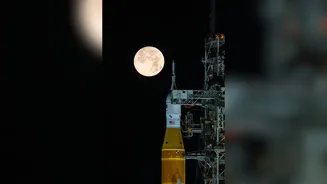
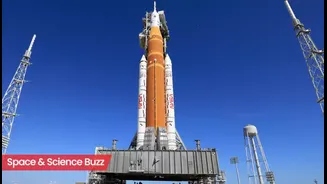
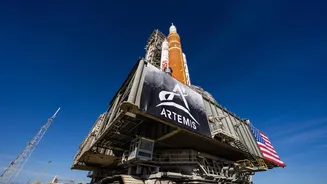
Engineers are meticulously examining the potential origins of the problematic helium flow. Two primary hypotheses are being explored: a malfunction within the umbilical arm, which is crucial for delivering propellants and other vital resources to the rocket, or a defect in a check valve located inside the rocket itself. These valves are designed to control the direction of fluid or gas flow, and a faulty one could easily disrupt the precise management of helium. To conduct a thorough diagnosis and implement the necessary repairs, there's a strong possibility that the Space Launch System (SLS) rocket and the Orion spacecraft will need to be transported back to the Vehicle Assembly Building at Kennedy Space Center. This move would allow for a more comprehensive examination and ensure all components are functioning optimally before the mission can proceed. The indefinite nature of the new launch date underscores the complexity of the situation and NASA's commitment to safety.
Artemis II's Grand Objective
Despite the current delay, the Artemis II mission retains its profound significance for the future of space exploration. This mission is set to carry a crew of four astronauts—Reid Wiseman, Victor Glover, Christina Koch, and Jeremy Hansen—on a historic 10-day journey. Their itinerary involves circumnavigating the Moon, marking the farthest distance humans will have traveled into space since the Apollo 17 mission in 1972. The primary purpose of this voyage is not merely to reach a destination but to gather invaluable data and test critical systems for subsequent lunar missions. It serves as a vital stepping stone, paving the way for sustained human presence on the Moon and eventual crewed missions to Mars. The successful execution of Artemis II is paramount to achieving these ambitious long-term goals in space exploration.