







AI-Powered Design Conversion
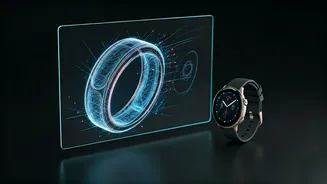
The core innovation lies in artificial intelligence's ability to interpret casual sketches and convert them into sophisticated, production-ready patterns
for wearable devices. This technology analyzes your hand-drawn designs, vectorizes them to ensure clarity on small screens, and optimizes them for interfaces that rely on glanceable information. Imagine transforming a simple geometric shape into a dynamic watch face that displays health metrics or a unique band for a smart ring. The AI adapts these designs, considering future trends in wearable user experience, such as voice and gesture controls, to create personalized visuals that are both aesthetically pleasing and functional. This seamless process democratizes design, allowing individuals to craft unique interfaces for their smart gadgets without needing extensive graphic design expertise.
Essential AI Tools
Building an application that transforms sketches into wearable designs requires leveraging state-of-the-art AI tools. For instance, platforms like FashionINSTA can directly process your doodles, generating precise vector graphics suitable for wearable screens and simulating how they would appear on different materials or displays. To ensure real-time performance on devices like the Apple Watch, integrating Core ML is crucial, aiming for processing latencies under 20 milliseconds. For the Android ecosystem and Wear OS, TensorFlow Lite can be employed, particularly for tasks involving motion detection, such as interpreting gyroscope data to adapt designs based on user movement. These tools work in tandem to create a robust system capable of handling diverse design inputs and device outputs.
Seamless Cross-Platform Integration
A key focus in developing these doodle-to-wearable apps is ensuring widespread compatibility across various smart devices. The goal is to provide a consistent and intuitive user experience, whether someone is using a Garmin smartwatch, an upcoming smart ring, or another wearable platform. Predictive AI plays a vital role here, learning user habits and analyzing activity data to suggest subtle design modifications. This adaptive capability means that patterns derived from doodles can intelligently respond to a user's movements and personal preferences, enhancing both usability and the sense of personalization across different devices. This comprehensive approach ensures that the creative vision is accurately translated and functionally implemented, regardless of the specific hardware.
Empowering Wearable Creativity
This AI-driven approach empowers a broad range of users, from hobbyists to established brands, to create innovative, utility-focused wearables. Imagine designing custom automation triggers or stylized payment interfaces directly from your sketches. As AI continues to evolve, transforming raw inputs into sophisticated health intelligence by 2026, these doodle-to-design applications make personalization exceptionally effortless and proactive. The ability to materialize functional designs from simple drawings without requiring advanced technical skills or significant resources effectively bridges the gap between pure creativity and practical functionality in the rapidly expanding world of wearable technology.