






Habitats for Future
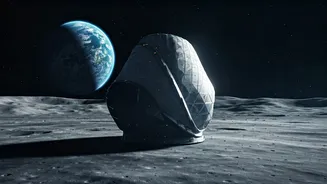
At a recent Space Symposium, Max Space showcased a significant advancement in space habitation: a large, sub-scale expandable habitat. This innovative
design tackles a core challenge of space exploration: providing ample living and working space for astronauts without the immense cost and complexity of launching large, rigid structures. The core concept behind this technology is to offer a considerably larger internal volume that can be compactly stowed for launch and then unfurled once in orbit or on a celestial body. This approach is key to enabling sustained human presence in space, whether that's aboard space stations circling our planet or for future pioneering missions to the lunar surface and beyond. The company's CEO highlighted that this development is a critical step towards making long-term living in space a tangible reality for humanity.
Partnership for Progress
Reinforcing its commitment to advancing extraterrestrial living solutions, Max Space has forged a strategic alliance with Voyager Technologies. This collaboration is aimed at collectively developing superior living environments for humans operating beyond Earth's atmosphere. According to Voyager's CEO, this partnership represents a monumental leap forward in ensuring humanity's continued and active presence on the Moon and other distant worlds. The joint venture's roadmap includes rigorous ground-based testing and subsequent in-space demonstrations. These crucial phases are meticulously planned to validate the technology's effectiveness and pave the way for the swift establishment of functional habitats on both the Moon and Mars, bringing the prospect of off-world settlements closer to fruition.