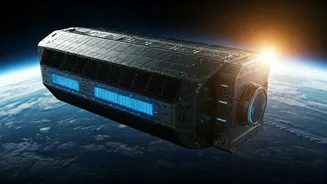







Space-Based AI Compute
The burgeoning demand for Artificial Intelligence (AI) is pushing the limits of Earth-bound data centers. These facilities face significant challenges
related to power availability, efficient cooling systems, and the finite availability of land. In response to these constraints, forward-thinking Indian startups are exploring a radical solution: establishing data centers in low Earth orbit. The vision is to harness the virtually inexhaustible solar energy available in space and leverage its unique environmental conditions to support advanced AI computations. This strategic shift represents a significant leap in computing infrastructure, aiming to provide a scalable and sustainable platform for the future of AI development and deployment.
Pioneering Orbital Ventures
Several ambitious Indian companies are already charting courses for orbital AI deployment. For instance, a collaboration between Pixxel and Sarvam AI is on track to launch the Pathfinder satellite by the end of 2026. This satellite is designed to perform complex AI model operations and image processing directly in orbit, reducing latency and increasing efficiency. Agnikul Cosmos is actively developing its own launch systems and specialized upper-stage platforms, specifically engineered to house and operate compute hardware in space. Furthermore, TakeMe2Space has ambitious plans to deploy a massive satellite by 2029, boasting an astonishing 400 petabytes of storage capacity. This colossal storage is intended to serve critical sectors such as defense and finance, which require immense data handling capabilities. While challenges such as thermal management in space and high-speed data transmission persist, the Indian space technology sector is demonstrating a strong readiness to tackle these complex issues.