



Understanding Solar Storms
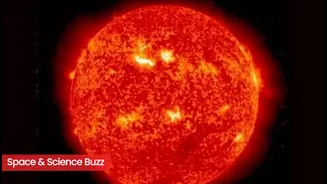
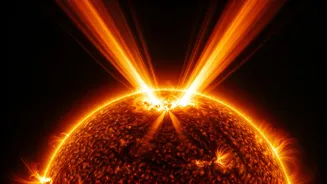
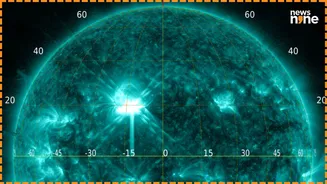
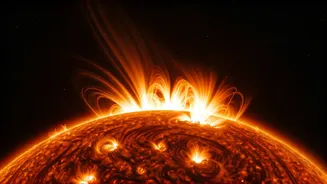
Solar storms, also known as geomagnetic storms, are disturbances in Earth's magnetosphere caused by the sun's activity. These events stem from coronal
mass ejections (CMEs) and solar flares, which release massive amounts of energy and charged particles into space. When these particles reach Earth, they interact with our planet's magnetic field. The strength of a solar storm is measured on a scale, with the most intense events classified as extreme. A severe solar storm can pose significant risks. Solar flares, sudden bursts of energy from the sun, can cause radio blackouts, while CMEs can disrupt satellite operations and overload power grids. The frequency and intensity of solar storms vary, linked to the sun's 11-year solar cycle. Scientists monitor solar activity to predict and prepare for these events, providing advance warning to minimize disruptions. It is important to remember that these are natural phenomena, but their effects require careful monitoring and proactive management.
Potential Earthly Impacts
The effects of solar storms on Earth can be widespread, touching various aspects of our technological infrastructure and natural environment. Radio communications are particularly vulnerable, with high-frequency radio waves susceptible to disruptions during solar flares. Satellites in orbit face increased radiation exposure, which can lead to operational problems and shortened lifespans. Power grids are also at risk. The geomagnetic disturbances caused by solar storms can induce electric currents in power lines, potentially causing blackouts and damage to transformers. In addition to these technological impacts, solar storms can also cause auroras. These spectacular displays of light, often seen at higher latitudes, are a visual manifestation of the interaction between solar particles and Earth's atmosphere. While beautiful, even these auroral displays indicate that our planet's magnetic field is being significantly affected. Therefore, understanding the potential impacts is crucial for disaster preparedness.
Monitoring and Preparedness
Monitoring solar activity is essential for predicting and preparing for solar storms. Space weather agencies around the globe employ various tools and techniques to track solar flares and CMEs. These tools include solar observatories, both ground-based and space-based, that constantly monitor the sun. When a significant solar event is detected, alerts are issued to various sectors, including power companies, satellite operators, and communication providers. Power companies can implement protective measures, like disconnecting parts of their grid, to prevent damage. Satellite operators can take steps to protect their spacecraft, such as turning off sensitive equipment. The goal is to provide enough warning to minimize disruptions. Ongoing research also plays a crucial role in improving our understanding of solar storms, allowing for better prediction models and mitigation strategies. This constant vigilance and proactive planning are essential to protect our modern, technology-dependent society.
What to Expect Today
The specific impacts of today's solar storm will depend on its intensity and the Earth's position relative to the sun. Depending on the size of the storm, you might see possible disruptions to radio communications. Satellite operations could also be affected, leading to temporary service interruptions. There is a possibility of auroras appearing at higher latitudes, offering a visual spectacle. You can stay informed by monitoring space weather reports from reliable sources, such as the National Oceanic and Atmospheric Administration (NOAA) Space Weather Prediction Center. Regular updates will provide the most up-to-date information on the storm's progress and any potential impacts. Keep an eye on weather forecasts and local news. Being informed allows you to prepare for potential disruptions and understand the context of any unusual events you may experience. It's a reminder of the dynamic relationship between Earth and the sun.