





Rigorous Space Simulation
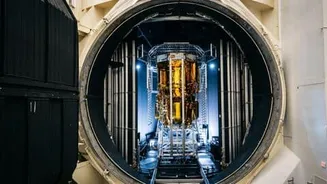
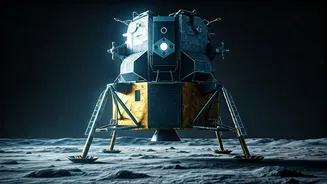
The Blue Moon Mark 1, a prototype lunar lander developed by Blue Origin, has successfully undergone a series of demanding environmental tests orchestrated
by NASA at its Johnson Space Center. These trials meticulously simulated the harsh conditions found on the Moon's surface, subjecting the lander to extreme temperature fluctuations and the unforgiving vacuum of space. Passing these tests is a significant milestone, demonstrating the robust design and resilience of the Mark 1. Although this particular model is not intended for carrying human passengers, its successful performance provides invaluable data and validation for the next generation of lunar landers. The objective of these tests was to ensure that the spacecraft's components and systems can withstand the intense challenges of a lunar environment, a critical step in preparing for deeper space exploration and the establishment of a sustained human presence beyond Earth. The gathered insights will directly inform the refinement of future lander designs, enhancing their reliability and operational capabilities for missions to come.
Path to Lunar Delivery
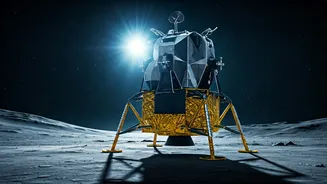
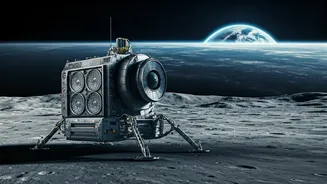
With the successful completion of its environmental testing, the Blue Origin Blue Moon Mark 1 is slated for a vital cargo delivery mission to the Moon's South Pole later this year. This upcoming mission represents a tangible step towards establishing a more consistent and functional presence on the lunar surface. By proving its capability to handle the rigors of space travel and land on extraterrestrial terrain, the Mark 1 is acting as a crucial precursor to more ambitious endeavors. Its successful tests bolster confidence in the technology's readiness for its intended role, which is to transport essential supplies and equipment. This groundwork is fundamental for supporting future scientific research and potential resource utilization on the Moon. The data gathered from this cargo mission will be instrumental in refining operational strategies and further validating the Mark 1's design principles before it is potentially adapted for more complex payloads and human transport.
Artemis Program Advancement
The achievements of the Blue Moon Mark 1 are directly contributing to the broader goals of NASA's Artemis program, which aims to return humans to the Moon. While the Mark 1 itself is designated for cargo, its successful testing provides a critical foundation for the development of the Mark 2 lander, a vehicle specifically designed to carry astronauts. Blue Origin has explicitly stated that the performance data and lessons learned from the Mark 1's trials will be incorporated to enhance the capabilities of its subsequent lander. This iterative development process is essential for ensuring the safety and efficacy of human lunar missions. However, the overall timeline for landing humans on the Moon by 2028 faces ongoing challenges, including recent setbacks with rocket development and testing procedures. These complexities underscore the intricate nature of space exploration and the continuous need for technological innovation and adaptation to achieve ambitious national and international objectives in space.