






The Lunar Shadow
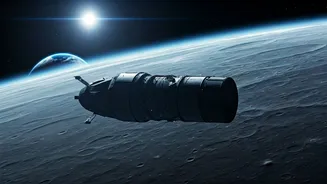
During NASA's ambitious Artemis mission, a remarkable event is poised to occur: the Orion spacecraft, carrying its crew, will experience a full 40 minutes
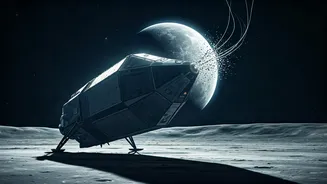
of radio silence as it journeys around the far side of the Moon. This means no communication signals, whether radio or laser, will reach Earth from the capsule. This period of complete isolation is a rare phenomenon, reminiscent of the contemplative moments experienced by Apollo 11 astronaut Michael Collins back in 1969, who famously felt a sense of profound solitude while orbiting the Moon. Pilot Victor Glover has described this upcoming blackout as an opportunity for everyone on Earth to pause and reflect, drawing a parallel to Collins' unique perspective. The mission's progression behind the lunar body underscores the vast distances and unique challenges of space travel, where even established communication links can be temporarily severed by celestial mechanics.
Communication's Crucial Role
This impending communication blackout serves as a stark reminder of the critical importance of maintaining steady contact with spacecraft operating in deep space. The ground teams, including those stationed in Cornwall, diligently monitor the Orion capsule, experiencing palpable relief when communication is re-established. To mitigate such extended periods of silence in future lunar endeavors, space agencies like the European Space Agency (ESA) are actively developing and planning for a constellation of satellites strategically positioned in orbit around the Moon. The objective of these lunar orbiting satellites is to provide uninterrupted coverage, ensuring that missions can transmit and receive data seamlessly, regardless of their position relative to Earth. Meanwhile, during their temporary disengagement from Earth, the Artemis crew will utilize the quiet window productively by focusing on observing the lunar surface and capturing high-resolution photographs, images that will be eagerly shared once contact is restored.