





AI's Galactic Discovery
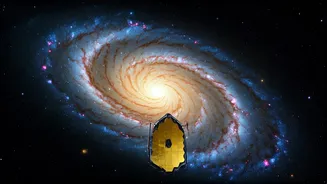
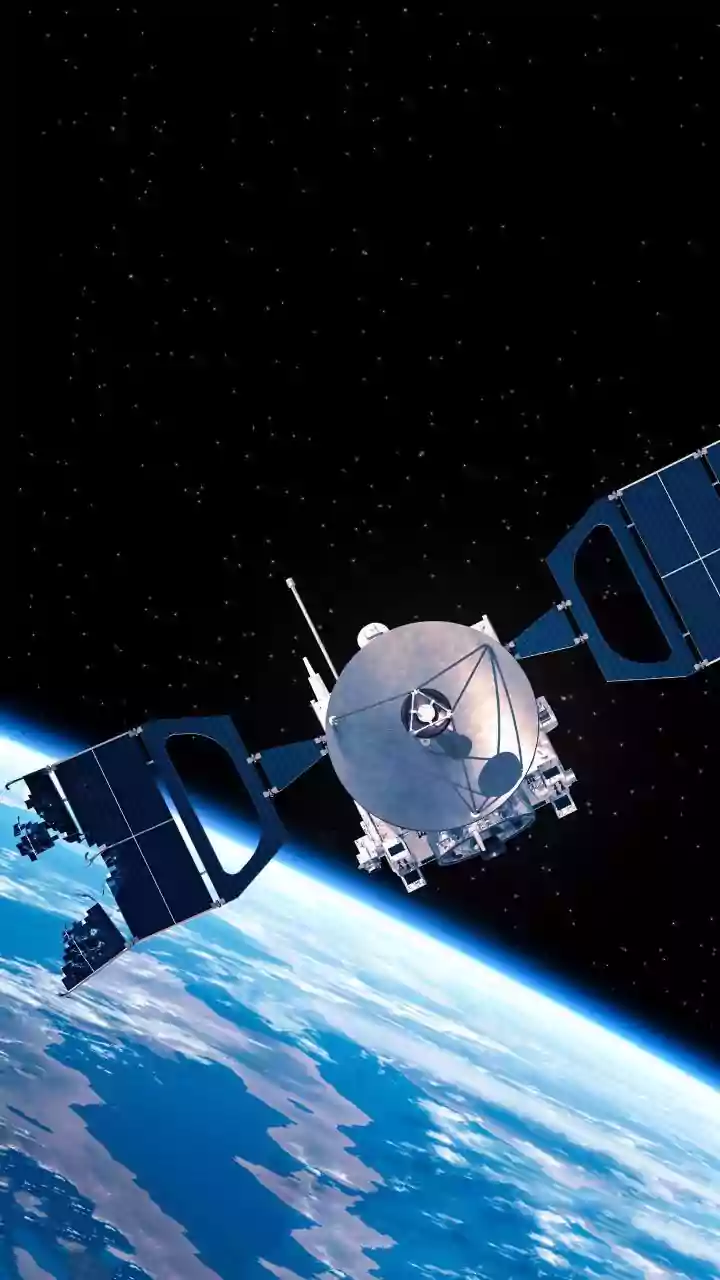
Astronomers have harnessed the power of artificial intelligence to sift through a monumental collection of images captured by the Hubble Space Telescope
over 35 years. This meticulous AI-driven analysis has brought to light more than 1,300 unusual celestial objects, with over 800 of these being entirely new to scientific documentation. The AI was tasked with examining nearly 100 million tiny image cutouts, each representing a small patch of the sky about seven to eight arcseconds wide. Astonishingly, this massive undertaking was completed in a mere two and a half days, a feat that would be practically impossible for human researchers due to the sheer volume of data. This highlights the transformative potential of AI in accelerating astronomical research and extracting valuable insights from existing, vast datasets.
Cosmic Anomalies Revealed
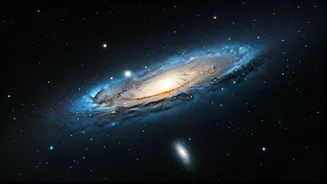
The catalog of discovered anomalies presents a fascinating array of cosmic peculiarities. Among these are galaxies locked in dramatic interactions, some in the process of merging, exhibiting bizarrely distorted forms or extended tendrils of gas and dust. The collection also includes striking examples of gravitational lensing, where the immense gravity of a closer galaxy acts like a cosmic magnifying glass, bending and reshaping the light from more distant objects into arcs and rings. Furthermore, the AI identified galaxies with intense bursts of star formation, ethereal 'jellyfish' galaxies being pulled apart by tidal forces, and even edge-on protoplanetary disks within our own Milky Way, showcasing the dynamic environments where planets are born around young stars. Intriguingly, several dozen of these objects defied classification within current astronomical frameworks, hinting at the existence of phenomena yet to be understood.
AnomalyMatch: The AI Detective
To achieve this remarkable feat, the European Space Agency developed a sophisticated neural network named AnomalyMatch. This AI operates by learning intricate visual patterns within the image data, much like how the human eye perceives and interprets scenes. AnomalyMatch's design enables it to rapidly scan enormous astronomical archives, a task far beyond the practical capabilities of manual inspection by human experts. The Hubble telescope's observational history, spanning 35 years, has created an unparalleled dataset, and AnomalyMatch provides the key to unlocking its full scientific potential. While citizen science initiatives have aided discovery, the sheer scale of archival data, alongside upcoming surveys from missions like Euclid and the Vera C. Rubin Observatory, necessitates advanced AI tools. AnomalyMatch was instrumental in conducting the first comprehensive, systematic search of the Hubble Legacy Archive, with human astronomers then manually verifying the AI's findings. This methodology powerfully demonstrates how artificial intelligence can significantly enhance the scientific return from existing observational data.