





Rapid Traffic Escalation
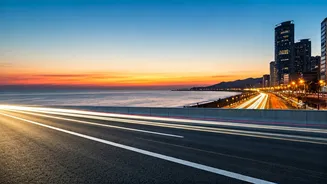
In a remarkable two-year span, Mumbai's Coastal Road-South has witnessed an astonishing escalation in its daily vehicular traffic. Launched in March 2024,
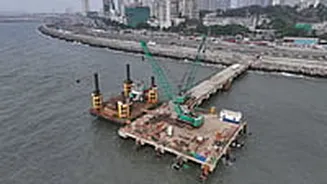
this vital corridor initially saw a modest usage of approximately 8,787 vehicles per day. However, by March 2026, this figure had surged to an impressive 63,003, marking a nearly sevenfold increase. This substantial growth indicates the road's rapid integration into the daily commute of Mumbaikars. Cumulatively, since its inception, a staggering 3.16 crore vehicles have traversed this route. The project, officially named Dharamveer Swaraj Rakshak Chhatrapati Shambhaji Mumbai Coastal Road, was brought to fruition with an investment of Rs 13,893 crore. Its primary allure lies in its efficiency, slashing travel durations between Marine Drive and Worli from a cumbersome 30-40 minutes to under 10 minutes.
Growth Catalysts Unveiled
The ascent in traffic volume on the Coastal Road has been a progressive trend, with a particularly sharp acceleration observed after August 2025. This pivotal month marked the road's transition to a 24/7 operational status, coinciding with Independence Day celebrations. Simultaneously, the scenic seafront promenade was opened to the public, acting as a significant draw for both commuters and recreational visitors. The immediate impact was evident, with daily traffic figures crossing the 45,961 mark in that same month. Subsequent reports from The Times of India confirm a consistent upward trajectory in vehicle numbers since then. This sustained growth dramatically outpaces the initial projections from the 2016 project report, which had forecasted an annual traffic increase of only 2% through 2043.
Congestion and Equity Concerns
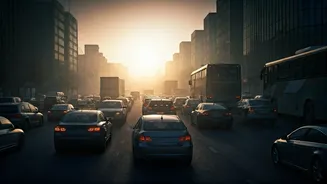
While the Coastal Road has undeniably streamlined commutes for many in South Mumbai, its benefits are not uniformly distributed. Urban planner Vivek Pai notes that the road, alongside the Metro, has profoundly reshaped urban mobility. However, he highlights a significant disparity: the advantages predominantly accrue to private car owners and those who can afford taxis. Notably, two-wheeled vehicles are prohibited on the Coastal Road, and the provision of BEST bus services along the corridor remains limited. This exclusionary aspect means that a considerable portion of everyday commuters, particularly those reliant on public transport or two-wheelers, are largely excluded from its benefits. This has led to frustration among residents near interchanges, with areas like Breach Candy experiencing traffic pile-ups as vehicles divert from less congested routes, causing localized congestion issues, as observed by residents like Nigam Lakhani.
Shifting Traffic Patterns
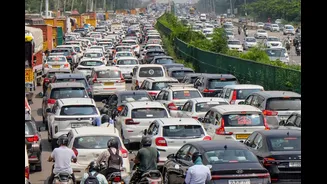
The increased usage of the Coastal Road has led to a noticeable redistribution of traffic across the city, with some areas experiencing relief while others face new challenges. While localities such as Pedder Road and the vicinity of Jaslok Hospital have become less congested, the traffic volume has merely shifted elsewhere. Residents situated near the road's interchanges, like Nigam Lakhani from Breach Candy, report an increase in traffic jams in their neighborhoods due to the rerouted flow of vehicles. Furthermore, the sub-10-minute travel time advantage between Marine Drive and Worli, a key selling point of the Coastal Road, is increasingly becoming difficult to achieve for regular users. This is attributed to the consistently heavy traffic now characteristic of the route, leading to complaints about halted traffic and perceived inadequacies in traffic management, as expressed on social media platforms and directed towards authorities like @MTPHereToHelp and @MumbaiPolice.