







The Golden Age of Journeys
Decades ago, Indian train journeys were more than just transit; they were immersive social experiences. Stations buzzed with anticipation, linking travelers
to their aspirations. Delays often meant opportunities for reading or playing games, fostering impromptu engagement. Once aboard, a gradual shift occurred from initial wariness to camaraderie. Passengers shared travelogues, swapped stories about their hometowns, and even offered lower berths to elders, showcasing a natural social grace. The unfolding of elaborate meal boxes, filled with homemade delicacies, became a focal point, bridging divides and strengthening bonds through shared culinary delights. Even simple acts, like sharing cool water from insulated jugs, transformed strangers into companions. The evenings often culminated in lively 'Antakshari' sessions, where melodious singing filled the coaches. Crucially, a spirit of mutual consideration prevailed; if noise became an issue, participants readily adjusted the volume, highlighting a profound social empathy that defined these journeys on wheels.
Modern Travel's New Reality
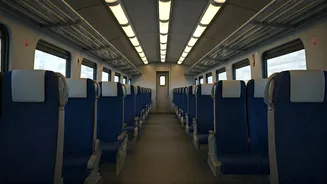
Today's Indian train travel presents a starkly different picture, especially on modern fleets like the Vande Bharat Express, which now rivals air travel in comfort and speed. While the efficiency, cleanliness, and prompt service are undeniable improvements, a palpable sense of social detachment has emerged. Upon boarding, passengers often prioritize connecting to charging ports, immediately immersing themselves in their personal digital devices. This leads to a fragmented atmosphere where individuals sit together physically but exist in separate virtual realities. Conversations with fellow travelers are rare, replaced by the omnipresent sound of mobile phones, frequently used on speaker mode. Films, short videos, and music blare from multiple devices simultaneously, creating a cacophony. A particularly jarring incident involved a passenger discussing business deals loudly throughout the journey, his personal finances laid bare for all to hear. When another traveler politely requested a family with young children to lower their music volume, the response was a dismissive, 'why should I? There is no such rule.' This highlights a shift where consideration for others in shared spaces seems to be eroding, replaced by individualistic attitudes that prioritize personal convenience over collective comfort.
Global Responses to Noise
The issue of disruptive noise in public transport, often termed 'sodcasting,' is a global concern, prompting various transport authorities to implement etiquette guidelines. Airlines like United Airlines now mandate headphone use for personal audio, with potential penalties for non-compliance. In London, the Metro launched a campaign in 2025 to curb loud music from portable devices, even threatening to revoke travel cards for 'anti-social behavior.' These evolving passenger codes reflect a growing recognition of the problem. Experts propose clear, enforceable measures, including mandatory headphone usage, restrictions on loud phone calls, and designated quiet zones. However, some social scientists offer a different perspective, viewing loud music as a way for individuals to assert their presence and 'mark social territory.' This viewpoint is countered by those who argue that public transport is inherently a shared space, and its quality depends on mutual respect. Historically, devices like boom boxes and transistor radios also allowed music to be a mobile, public phenomenon, suggesting that the desire to share sound is not entirely new, though its modern manifestation is proving more challenging to manage.
India's Evolving Standards
In response to the rising chorus against disruptive noise, Indian Railways introduced a ban in May 2022 on loud phone conversations and music playback on speakers during night travel. Passengers are encouraged to report violations to train staff or via the 139 helpline, empowering TTEs and RPF personnel to take action against offenders. Despite the enforcement of 'quiet hours' from 10 pm to 6 am, adherence remains inconsistent. The core argument against unchecked mobile audio remains that public transport is a shared environment, and its value is diminished when users lack respect for this collective space. While some may argue that strict regulations are excessive, the alternative is a gradual decline in public etiquette, where discomfort becomes normalized and accountability evaporates. India has demonstrated its capacity for large-scale infrastructure transformation; the next frontier involves establishing and enforcing norms that ensure modern travel is also civil, even if courtesy needs to be mandated by rule. The demand is for these anti-nuisance rules to be more than advisory, backed by onboard announcements and penalties for persistent offenders, acknowledging that basic courtesy, like flushing a toilet, is not always intuitive and may require explicit guidance and enforcement.