






Cortisol: Your Body's Ace
Cortisol, often labelled the 'stress hormone,' is fundamentally essential for our survival and ability to adapt to challenges. When you engage in physical
activity, cortisol plays a crucial role in ensuring your muscles have the energy they need by stimulating the breakdown of stored carbohydrates and fats. This process is vital for fueling your workout. Beyond energy provision, cortisol also helps maintain the integrity of your blood vessels and acts as a potent anti-inflammatory agent. It skillfully modulates your immune system, preventing an overreaction of inflammation that could otherwise arise from the microscopic tissue damage caused by intense exercise. In essence, cortisol is a key player in both immediate energy mobilization and the body's protective responses to exertion, making it indispensable for life and performance.
When Exercise Harms
While exercise is inherently a form of stress that can lead to positive adaptations, it crosses a dangerous threshold when the demands of training consistently outweigh your body's capacity to recover. Think of high-volume resistance training or extended periods of intense aerobic activity. When these are coupled with insufficient rest, disrupted sleep patterns, or significant external life pressures, your hypothalamic-pituitary-adrenal (HPA) axis, the body's central stress response system, can become perpetually activated. The natural ebb and flow of cortisol throughout a 24-hour period, which typically includes lower levels at night, gets thrown off balance. If your body doesn't experience adequate periods of low cortisol, what was intended as beneficial stress (eustress) transforms into a detrimental physiological strain that hinders progress and well-being.
Cortisol's Remodeling Power
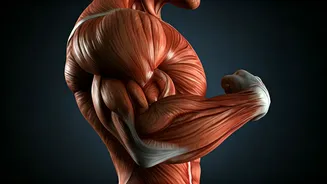
The persistent elevation of cortisol due to overtraining doesn't just make you feel tired; it actively reshapes your body at a cellular level. This hormone accelerates the breakdown of proteins, a process facilitated by the ubiquitin–proteasome system, meaning your muscles might struggle to repair and grow. Furthermore, cortisol actively suppresses pathways that promote muscle building, such as mTOR signaling, and diminishes the effectiveness of insulin-like growth factor 1 (IGF-1). This combined effect leads to a sustained reduction in the rate at which your body can synthesize new proteins, hindering recovery and muscle development. Additionally, visceral fat cells, those located deep within your abdomen and surrounding your internal organs, possess a higher concentration of cortisol receptors. When cortisol levels remain chronically high, these receptors become more active, prompting these specific fat cells to store excess fat, contributing to an increased waistline.