





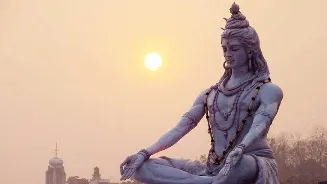

What is the story about?
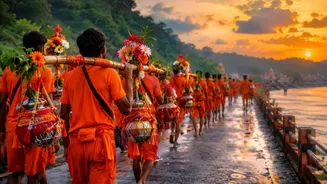
The sacred month of Sawan has begun today. One of the most important aspects of the holy month is the Kanwar Yatra, the largest annual pilgrimages dedicated
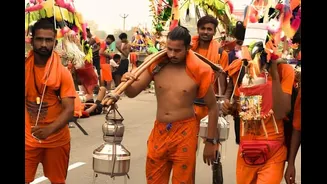
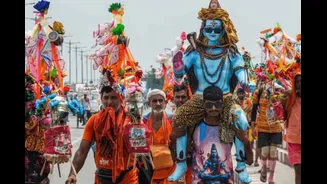
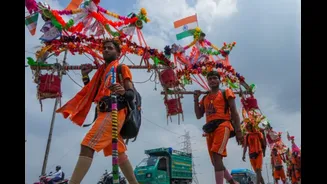
to Lord Shiva. Devotees carry kanwars on their shoulders, walking miles to reach a Shiva Temple. For the unversed, a kanwar is a decorated bamboo pole with two water pots tied to its ends. Kanwariyas travel long distances to collect water from sacred rivers such as Ganga before offering it to Lord Shiva through jalabhishek.
Why Is the Kanwar Yatra Observed During Sawan?
Monsoon is the time that symbolises earth's renewal, growth and life-giving rains. It's also a time when historically activities related to agriculture would slow down. This allowed members of rural communities to undertake long foot journey.
But the most important reason is the mythological story associated with it. The tradition is linked to Samudra Manthan and the emergence of the deadly poison called halahal. According to mythological legend, it was during the month of Sawan, the gods and demons churned the cosmic ocean in search of amrit. But, before the amrit appeared, a powerful poison called halahal emerged that had the capacity to destroy the Universe. Lord Shiva consumed the poison and held it in his throat.
The intense heat of the poison caused his throat to turn blue. This is also the reason that Lord Shiva is known as Neelkanth. To ease his suffering, the gods offered water to Lord Shiva. This helped in cooling his body and reduced the effects of the poison.
This is also the reason that devotees continue the tradition and bring water from sacred rivers during Sawan. The water is then offered to Lord Shiva through jalabhishek.
Who Was the First Kanwariya?
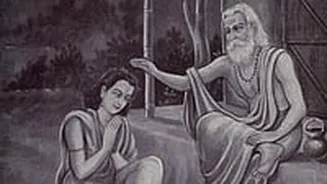
There is no concrete written evidence, as different Hindu scriptures and regional traditions offer different accounts. However, several mythological figures are believed to have started the tradition.Lord Parashurama
According to one popular belief, Lord Parashurama was the first Kanwariya. It is said that he carried holy water from Garhmukteshwar in a kanwar and offered it to the Shivling at Pura Mahadev in Baghpat, Uttar Pradesh.Lord Parashurama is regarded as one of Lord Shiva's greatest devotees. Even today, lakhs of devotees visit Pura Mahadev during Sawan to perform jalabhishek.
Lord Rama
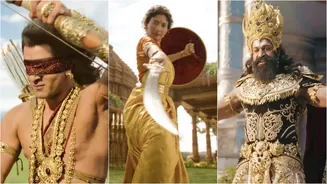
Another legend states that during the Treta Yuga, Lord Rama, accompanied by Goddess Sita and Lakshman, brought Ganga water from Sultanganj in Bihar and offered it to the Shivling at Baidyanath Dham in Deoghar.Ravana
Another widely known belief is associated with Ravana, the king of Lanka and an ardent and powerful devotee of Shiva. According to mythology, after Lord Shiva consumed the halahal poison during the Samudra Manthan, Ravana brought Ganga water in a kanwar and performed jalabhishek to help soothe the burning caused by the poison.Shravan Kumar
Another tradition links the Kanwar with Shravan Kumar, who was devoted to serving his old, blind parents.According to legend, he carried his parents on his shoulders in a kanwar while taking them on a pilgrimage. On returning, he also brought back Ganga water to perform rituals in their honour. This act of devotion is considered another inspiration behind the Kanwar tradition.
Disclaimer: This article is based on popular beliefs. Times Now is not responsible for the accuracy or completeness of the information and facts provided here.