



Mahashivratri is not just a night of fasting and chanting, it is a night of awakening. Devotees all over India stay awake all night to offer prayer, chant bhajans
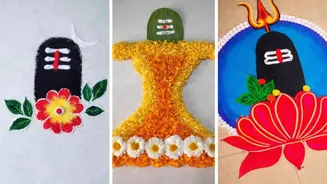
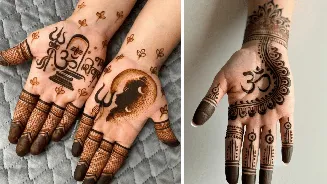
and Om Namah Shivaya to seek the blessings of Lord Shiva, the destroyer of evil and the symbol of transformation. Amid all these rituals, there is another beautiful tradition that adds colour and sanctity to homes - rangoli. It is said that creating a Mahashivratri rangoli at the entrance of your home invites divine energy and positive vibrations. In Hindu culture, rangoli is a symbol of prosperity and protection and on this sacred night, devotees often create motifs inspired by Shiva's signs such as the Trishul (trident), Damru (drum), Shivling, crescent moon, serpents, and the sacred Om. Each symbol carries spiritual meaning. The Trishul represents creation, preservation and destruction; the Damru signifies cosmic sound and rhythm; the Shivling symbolises infinite energy. These rangolis were traditionally made with coloured powders, rice flour or flower petals, in shades of white, blue and saffron, the sacred colours. Some also prefer minimalistic white chalk designs, reflecting Shiva’s simple, meditative essence, while others choose vibrant patterns that celebrate his cosmic form, Nataraja.
Mahashivratri simple rangoli designs
More intricate rangoli
Shivling With Radiating Aura
Create a large Shivling at the centre with soft circular aura lines spreading outward. On both sides, extend symmetrical floral patterns and bel patra motifs to give it a wide, balanced look. Use white and blue shades for a divine glow effect.
Trishul–Damru Border Rangoli
Place a bold Trishul in the centre horizontally, with a Damru crossing at the base. Extend the design sideways with repeating Trishul and Om symbols as a border pattern. This works beautifully for long entrance spaces.
Om With Crescent Moon Layout
Draw a large Om symbol stretched slightly wider than tall. Add the crescent moon and a small dot above it. On both sides, create flowing wave-like patterns representing the Ganga flowing from Shiva’s locks.
Nataraja Design
Create a horizontal silhouette of Shiva in his Nataraja form in the centre. Keep the figure simple in white chalk or powder, and expand the sides with flame-inspired patterns to symbolise cosmic energy.
Kailash Mountain Rangoli
Design a serene horizontal landscape featuring Mount Kailash, a rising moon, and a small Shivling in the foreground. Use soft blues, whites, and greys for a peaceful, meditative effect.
Om Namah Shivaya Rangoli
Write “Om Namah Shivaya” beautifully across the centre in a flowing calligraphy style. Decorate both ends with lotus flowers, bells, or symmetrical mandala patterns for a complete festive look.
Snake and Trishul Design
Draw a central Trishul with a serpent coiled around it. Extend the serpent’s body horizontally across both sides, blending it into intricate geometric patterns for a bold and powerful visual.