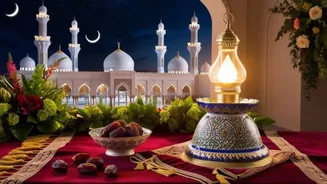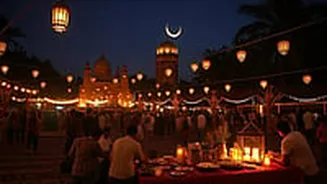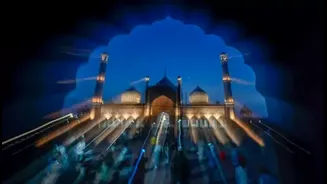







The Muslim holy month of Ramadan will begin this month. For one month, Muslims observing the fast will refrain from eating and drinking from dawn to dusk
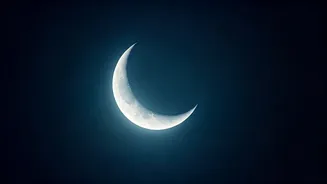
to achieve greater “taqwa”, or consciousness of God. Muslims across the world will attempt to sight the crescent moon marking the start of Ramadan on Tuesday, 17 February. However, as reported by Gulf News, “astronomers say the sighting will be astronomically impossible or unfeasible across the Arab and Islamic world, making Thursday, 19 February, the most likely first day of the holy month for the majority of countries that rely on a confirmed moon sighting.” It also states that, as a result, “countries that require an authenticated crescent sighting to declare the start of the lunar month are expected to complete 30 days of Shaaban on Wednesday, with Ramadan beginning on Thursday, 19 February.” In some countries, Ramadan might begin on Wednesday, 18 February. The Islamic calendar is based on the lunar cycle, and the start of Ramadan shifts 10 to 12 days earlier each year, completing a full rotation through all seasons approximately every 33 years.
Why is a fast observed by Muslims during Ramadan?
Among the five pillars of Islam, fasting during Ramadan is one of them. It is prescribed for Muslims as a form of worship and spiritual purification, with an emphasis on charity and good deeds during this period. “Fasting is one of the foremost sunnahs, which means living by the Prophet Muhammad’s example. It is a tradition in the long line of Abrahamic traditions. Jews and Christians also fast as a practice in their religions in different variations,” states Al Jazeera.
Those who fast during Ramadan do not eat or drink from dawn until sunset. The fast is broken only at sunset, most commonly with dates and water.
Disclaimer: This article is based on popular beliefs. Times Now is not responsible for the accuracy or completeness of the information and facts provided here.