




What is the story about?
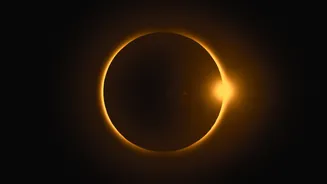
Even today, a lunar eclipse feels like the sky is holding its breath, and in the most beautiful form! Science may map its path with precision, but across
India, and even around the world, people continue to treat the eclipse as something spiritual, symbolic, disruptive, and at times, strangely dangerous, too. With the first lunar eclipse of 2026 coming in to greet us, beliefs are being whispered into years the same way they were generations ago, carrying a sense of mystical warning.
India’s Mythic Universe: Rahu, Ketu & The Shadow Over the Moon
In India, the eclipse is inseparable from the epic tale of Rahu and Ketu, one can almost call it synonymous. These are called the shadow demons who try to devour the Moon. Many still believe the sky carries an energy shift when this “cosmic swallowing” occurs. Homes fall silent, temples limit rituals, and people behave as if the air itself becomes heavier.
Sutak, known as the sacred period before the eclipse, is observed with remarkable seriousness in many families. Everything from cooking to travel is paused because generations have insisted that an eclipse disturbs the natural order, and humans must not disturb it further.
The Elaborate Restrictions on Pregnant Women
Now this is one probably everyone in India has heard of. One of India’s strongest, most persistent sets of eclipse beliefs revolve around pregnancy, layered, detailed, and often frightening, too.
Across regions, pregnant women are strictly told to not step outside the house, to not even look at the sky, even accidentally. Pregnant women are also asked to not sleep during the eclipse hours, not to enter the kitchen or cut vegetables, use needles, scissors or knives. They are also asked to stay away from any sharp jewellery or metal pins, if they are wearing any, pregnant women are asked to remove it. They are also not allowed to use fire to cook.
What makes these myths powerful is how many versions exist.
Some families say the child may be born with birthmarks shaped like the Moon’s shadow. Others warn of cleft lips, deformities, or premature labour. In many North Indian households, women are told to tie a metal key around their waist to “protect the womb from cosmic cuts.” In parts of South India, they’re asked to chant or keep a coconut nearby as a symbolic shield against Rahu.
A particularly bizarre myth insists that the baby inside “absorbs” negative eclipse energy through the mother’s skin, so women are told to sit still in well-lit rooms with curtains drawn. Another belief says the eclipse can “freeze the child’s movements,” so the mother must stay awake until the Moon is restored.
One thing to note here is that these are things people believe and there is no scientific evidence to prove any of this. These are mainly treated as cultural memories, carried forward more from fear than faith.
Food, Water & The Eclipse “Contamination” Beliefs
Across India, food becomes a point of intense superstition. Many believe cooked food “rots spiritually” during the eclipse, even if refrigerated. Some drop basil leaves into dishes, convinced it absorbs negative influence. Others throw away entire meals and start fresh afterward. Water is feared too, many won’t drink or serve it until the eclipse ends and they bathe.
In several states, people place silver or gold items in water or milk, believing these metals stabilise the environment during the eclipse’s shadow.
The Rituals to “Reset” After the Eclipse
Regardless of region, there is one common belief: you must cleanse yourself after an eclipse.
People bathe, wash their hair, change clothes, clean their floors, and sometimes even light incense or lamps to “remove leftover darkness.” Some chant specific mantras meant to “restore the Moon’s purity” within their homes.
The Global Myths: Dragons, Wolves, And Cosmic Battles
While India has Rahu and Ketu, other cultures created equally intense stories. In ancient China, a dragon devoured the Moon. In Norse mythology, wolves hunted and attacked the lunar light. These stories blur the line between fear and thrill—just like Indian myths do.
Mayan And Aztec Warnings About Unborn Children
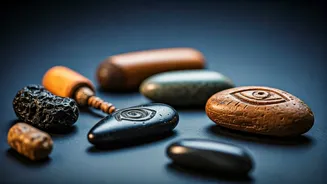
Interestingly, Mesoamerican cultures shared beliefs strikingly similar to India’s. They too saw the eclipse as dangerous for pregnant women, warning of deformities if expectant mothers went outside. Protective amulets were worn just like Indian talismans, showing how universal fears around pregnancy and cosmic events once were.
Modern-Day Myths: Emotion, Chaos & Strange Behaviour
Even now, people say eclipses affect their bodies physically and emotionally, causing mood swings, arguments, disruption in sleep cycles, and changes in animal behaviour as well. Farmers claim cows stop grazing. Pet owners swear dogs whine or hide. Some believe eclipses trigger disasters or shift energy fields. These modern myths, though wrapped in a new-age vocabulary, mirror ancient fears beautifully, they simply use updated language.
Why These Myths Still Matter in 2026
The enduring power of lunar eclipse myths reveals something profound. For all our science, people still crave stories, ones that connect us to something larger, older, and mysterious. Whether it’s Rahu swallowing the Moon, dragons battling in the sky, or warnings passed quietly to pregnant women, these myths offer meaning, comfort, caution, and identity.
And as the 2026 lunar eclipse approaches, these tales will once again travel from grandparents to grandchildren, from priests to believers, from the internet to living rooms. Not because they are true, but because eclipses remind us of a time when the sky felt alive, capable of warning, protecting, blessing, and threatening all at once.