






What is the story about?
Astrology has always attracted criticism. In recent years, however, it has only grown louder, especially online. It is routinely dismissed as unscientific,
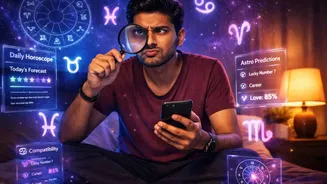
irrational or a comforting illusion that survives only because people want easy answers. And yet, despite this criticism, astrology apps continue to appear, and more importantly, continue to retain users. Sidhharrth S Kumaar, Chief Astrologer at NumroVani says, "This contradiction is difficult to explain away." If astrology were merely entertainment, interest would spike and fade. Instead, usage appears to be settling into routine. The question, then, is not whether astrology is true or false, but why so many people keep returning to it.
Who Is Actually Using Astrology Today?
One assumption that often falls apart under scrutiny is the idea that astrology users belong to a narrow demographic. Sidhharrth says, "Behavioural data suggests otherwise. According to the NumroVani How India Thinks 2025 Study, conducted across India over the course of the year, astrology usage now cuts across age groups and professions. Working professionals, entrepreneurs, homemakers, and even people over 50 are engaging with astrology platforms. Women form a large share of regular users, but men are also climbing up in the usage."Also Read: Valentine's Day 2026 Love Horoscope: Tarot Card Reveals What Each Zodiac Sign Needs In Love Right Now
What stands out is not just who is using astrology, but how often. The study found that around 78% of users engage with astrology or astrologers at least once every week, indicating that this is not occasional curiosity. It has become part of people's routines.
From Predicting The Future To Navigating The Present
Much of the scepticism around astrology assumes that users are chasing predictions about the future. In practice, that assumption no longer holds.What seems to be happening instead is a shift in use. People are not asking astrology to tell them what will happen years from now. They are using it to think through the present. When to act, when to wait, when to push, and when to pause. This explains why daily and weekly formats have grown more popular than long-term forecasts.
In this sense, astrology is being treated less like prophecy and more like a framing tool. It offers orientation, not certainty.
Astrology Is Not A Life Verdict
Another evolution is where astrology integrate in daily life. It is no longer limited to weddings or major life events only. People now consult astrology while planning travel, deciding when to initiate conversations at work, or choosing when to make personal changes.Lifestyle decisions have also become part of this pattern. From food habits and wellness routines to clothing choices for important days, grooming, and beauty-related decisions, astrology is being used as a soft signal rather than a rulebook. These are not dramatic interventions. They are small, frequent adjustments.
This kind of usage suggests leverage, not belief.
Who Are The Real Users?
One reason astrology continues to hold attention is emotional. The same study indicates that many users associate astrology with reduced anxiety and mental clutter. In uncertain environments, people look for tools that help them slow down before making decisions. Astrology appears to serve that purpose for a large group of users.Importantly, this does not mean people are abandoning logic or responsibility. In many cases, astrology is used alongside rational planning, not instead of it.
A Behavioural Shift, Not A Passing Trend
When nearly eight out of ten users engage with something every week, it becomes difficult to dismiss it as a fad. Trends come and go quickly. Habits persist because they offer some form of value.As Sidhharrth puts it, "People are no longer using astrology to predict their future. They are using it to make sense of their present. It has become a way to pause and decide how to move through everyday life."
Astrology may never satisfy scientific sceptics. But its continued, regular use suggests it is doing something else entirely. It is responding to how people experience uncertainty today.
And that, more than belief, explains why astrology apps continue to grow.