





Arthur's Seat's Grandeur
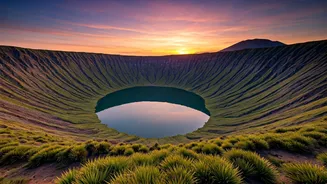
Standing majestically above the Scottish capital, Edinburgh, Arthur's Seat is a testament to ancient volcanic activity. This extinct volcano, which formed
approximately 350 million years ago, has long since cooled, evolving into a cherished natural landmark. Today, it beckons hikers and visitors to ascend its slopes, offering not only a refreshing outdoor experience but also panoramic vistas of the cityscape below. Its weathered form, sculpted by millennia of erosion, provides a tranquil contrast to its fiery origins, inviting contemplation of geological time and the enduring power of nature.
Bennett Lake's Wild Beauty
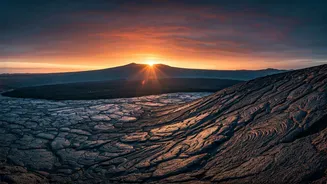
The Bennett Lake Volcanic Complex, though less familiar than some, presents a rugged and untamed wilderness shaped by primordial eruptions. This extensive area showcases a dramatic terrain that once pulsed with volcanic energy. Over vast stretches of time, the relentless forces of erosion have gradually softened its sharp edges, transforming the raw volcanic landscape into scenic vistas that now captivate the eye. It serves as a profound example of how geological upheaval can eventually give way to natural beauty, creating a unique environment for exploration and appreciation.
Kohala's Verdant Slopes
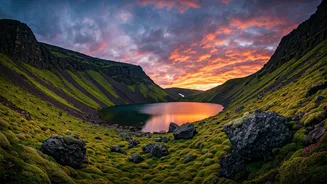
As the most venerable of Hawaii's major volcanoes, Kohala offers a serene present day contrast to its tumultuous past. Its last significant eruption occurred around 60,000 years ago, marking the end of its fiery period. Since then, this ancient formation has been thoroughly embraced by nature, its slopes now cloaked in a vibrant tapestry of lush vegetation. Deep, verdant valleys carve through its flanks, creating a breathtaking landscape that speaks of slow transformation and the powerful regenerative force of the natural world. Kohala stands as a peaceful giant, a living testament to Hawaii's volcanic heritage.
Mount Elgon's Vast Base
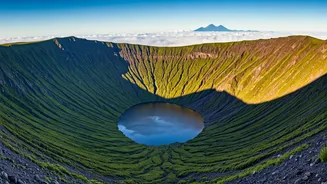
Mount Elgon, an ancient extinct volcano, boasts one of the largest volcanic bases on the planet, a colossal remnant of powerful geological forces. Its immense slopes, once a conduit for molten rock, have transitioned into a thriving ecosystem. Today, these slopes are adorned with dense forests, concealing intriguing caves and supporting a rich diversity of wildlife. The volcano's sheer scale and the life it now harbors underscore the profound and lasting impact of volcanic activity on shaping the Earth's surface and fostering biodiversity over immense periods.
Mount Thielsen's Peak
Known affectionately as the "Lightning Rod of the Cascades," Mount Thielsen presents a striking silhouette as a sharply eroded, extinct volcano. Its jagged and dramatic peak is a direct consequence of millions of years of relentless weathering and geological processes. This formidable spire, standing tall against the sky, is a powerful visual representation of resilience and the transformative power of time. It draws the eye and inspires awe, a stark reminder of the intense geological forces that once shaped this region and the enduring beauty found in its aftermath.
Sutter Buttes' Charm
Often referred to as the world's smallest mountain range, the Sutter Buttes are actually the remnants of an extinct volcano, offering a unique geological anomaly. These distinct hills rise abruptly and dramatically from the surrounding, otherwise flat, plains of California. Their isolated formation and peculiar topography create a striking visual contrast, making them a significant landmark. The Sutter Buttes serve as a fascinating reminder that even the smallest mountain ranges can have a grand volcanic past, their gentle contours masking an intense geological history.