



A Universe in Tune
For decades, scientists have theorized about the faint tremors in spacetime caused by cataclysmic cosmic events. In 2015, a century after Albert Einstein
first predicted them, gravitational waves were directly detected from colliding black holes. Now, the Laser Interferometer Gravitational-Wave Observatory (LIGO) and its international partners, Virgo and KAGRA, have achieved a monumental feat by doubling their catalog of these spacetime ripples. This latest collection, known as Gravitational-Wave Transient Catalog-4.0 (GWTC-4), boasts an impressive 128 newly identified gravitational wave events. This represents a substantial leap from the 90 events cataloged during the previous three observational runs, underscoring the rapidly advancing sensitivity and capability of these sophisticated detectors. The sheer volume of new data suggests that our universe is far more active in producing these cosmic collisions than previously imagined, painting a vibrant picture of ongoing astrophysical processes.
Unprecedented Variety Discovered
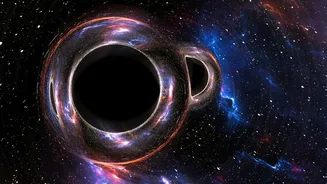
The latest trove of gravitational wave detections, GWTC-4, showcases an extraordinary diversity of cosmic collisions. This catalog includes evidence of mergers involving the most massive black hole binaries ever observed, with individual black holes reaching up to 130 times the mass of our Sun. Furthermore, scientists have recorded instances of highly asymmetrical mergers, where black holes of vastly different masses collide, and black holes spinning at speeds approaching 40% the speed of light. These extreme characteristics suggest that many of these black holes have undergone multiple prior collisions, forming 'merger chains' that explain their colossal sizes. The data also reveals two new instances of 'mixed mergers,' where a black hole and a neutron star have spiraled into each other, adding another layer of complexity to our understanding of compact object interactions. This expanded variety allows astrophysicists to probe the evolution of black holes across cosmic time and explore the conditions under which they form and grow.
Testing Einstein's Legacy
The wealth of data contained within GWTC-4 serves as a powerful tool for rigorously testing the predictions of Albert Einstein's theory of general relativity, his seminal work on gravity. Black holes, being one of the most profound and mind-bending predictions of this theory, represent extreme environments where gravity's effects are most pronounced. By observing the gravitational waves emitted during these cataclysmic events, scientists can scrutinize the theory in conditions far beyond anything achievable in terrestrial laboratories. The current findings indicate that general relativity continues to hold up under these intense astrophysical stresses, passing all observational tests to date. However, the increasing accuracy and volume of the data necessitate even more refined theoretical predictions to keep pace with the universe's revelations, highlighting the ongoing interplay between observation and theory in advancing our fundamental understanding of physics.
Pushing Observational Boundaries
The enhanced sensitivity of the LIGO, Virgo, and KAGRA detectors, as evidenced by the GWTC-4 catalog, is remarkable. These instruments can now detect neutron star mergers up to a billion light-years away and black hole mergers reaching distances of up to 10 billion light-years. This expanded observational reach allows scientists to probe cosmic history more effectively, observing events that occurred in the early universe. The ability to detect such distant and subtle signals signifies a major leap in our capacity to explore the cosmos. As researchers continue to refine detector technology and analysis techniques, they anticipate even more groundbreaking discoveries in future observing runs, promising to unlock further astrophysical mysteries and potentially reveal entirely unexpected phenomena that could reshape our understanding of the universe.