







Investigation Deepens
Authorities are diligently pursuing all avenues in the heartbreaking case of four family members who tragically passed away following the consumption of watermelon.
The primary focus of the investigation centers on the potential presence of rat poison, a substance known for its severe toxicity. Detectives revisited the deceased's residence, a home situated in the Pydhonie area of south Mumbai, with the hope of uncovering any remnants or direct evidence that could link the fatal meal to poisonous contaminants. This renewed search aims to scrutinize the environment where the family lived and potentially consumed the tainted fruit, seeking any overlooked clues that might shed light on the exact cause of their untimely demise. The complexity of the case is amplified by the absence of immediate, obvious traces of the poison, prompting a more thorough and methodical examination of the premises and surrounding circumstances.
Fruit of Death
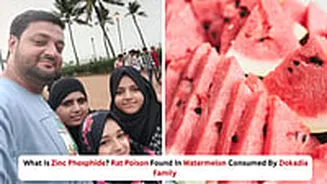
The incident unfolded on the night of April 25th, when Abdullah Dokadia, aged 40, his wife Nasreen Dokadia, 35, and their daughters Ayesha, 16, and Zainab, 13, shared a meal with five other relatives. Later, in the early hours of the following morning, around 1:30 AM, the family of four consumed watermelon. Tragically, within the subsequent twelve hours, all four succumbed to an unknown cause. This chilling sequence of events has placed the watermelon at the center of the investigation, raising urgent questions about its origin and any potential contamination. The police are meticulously examining the supply chain, considering the possibility that the fruit may have been poisoned either before reaching the family or during its preparation for consumption at home. The suddenness and severity of their deaths have sent shockwaves through the community.
No Direct Evidence
During the extensive searches conducted at the family's residence, investigators have not yet discovered any direct remnants of rat poison, specifically zinc phosphide, which is suspected as the cause of death. While a bottle containing a herbal concoction, identified as a rat repellent, was found on the second floor of their home during the initial investigation, subsequent checks confirmed it did not contain zinc phosphide. Relatives and police reports indicate that the building, like many in the area, did experience a rat problem, leading the Dokadia family to employ various pest control methods, including repellents and glue pads. This information suggests a plausible environment where rat poison might have been present, but its direct introduction into the watermelon remains unconfirmed. The absence of concrete forensic evidence at the scene necessitates a broader investigative approach, looking beyond the immediate household.
Further Inquiries
In light of the perplexing circumstances surrounding the deaths, the police are expanding their investigation to include interviews with the extended family. Statements will be recorded from Abdullah Dokadia's four brothers and two sisters, who reside in close proximity to the deceased. This broader questioning aims to gather more context about the family's routines, any potential conflicts, or unusual occurrences that might have a bearing on the case. The police are exploring two primary theories: either the watermelon was intentionally poisoned by someone within the household, or the contamination occurred further up the supply chain before it reached the family. The lack of definitive evidence means both possibilities are being given serious consideration as the investigation progresses, seeking to establish a clear timeline and motive.