








Massive Computing Deal
Anthropic, a leading artificial intelligence firm, has inked a significant computing capacity agreement with SpaceX, a move designed to substantially bolster
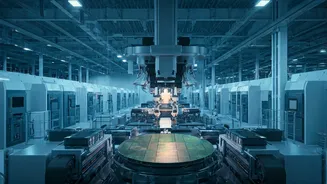
its ability to serve the ever-increasing demand for its advanced AI products. This partnership grants Anthropic access to over 300 megawatts of computing power from a vast SpaceX data center located in Memphis, aptly nicknamed Colossus 1. The agreement promises to "substantially" increase Anthropic's available computing resources, thereby enabling it to lift the usage limits currently imposed on its AI services. While the precise financial terms of this landmark deal remain undisclosed, industry estimations suggest that similar arrangements for data center space can range from $1.5 million to $2 million per megawatt annually. If these figures are indicative, the Anthropic-SpaceX collaboration could represent hundreds of millions of dollars in annual business for SpaceX's burgeoning infrastructure arm. This alliance places two prominent entities in the competitive AI development race into a collaborative relationship, highlighting the critical need for robust computing infrastructure to support innovation and growth in the field.
Soaring AI Demand
The recent surge in demand for Anthropic's AI tools has been nothing short of remarkable, prompting the company to aggressively seek out more substantial computing resources. Customers are increasingly turning to Anthropic's offerings to streamline various complex tasks, including sophisticated coding processes and other data-intensive operations. In response to this exponential growth, Anthropic's Chief Executive Officer, Dario Amodei, indicated at a conference following the SpaceX announcement that the company is working with utmost urgency to secure additional computing power. He revealed that Anthropic has experienced an astonishing "80x growth" in annualized revenue and usage during the initial quarter of the current year, underscoring the pressing need for scalable infrastructure. Beyond the SpaceX deal, Anthropic has also previously leveraged the cloud services and specialized chips provided by Alphabet Inc.'s Google, showcasing a multi-faceted approach to meeting its infrastructure requirements. The urgency to expand capacity is a direct reflection of the accelerating adoption and integration of AI technologies across diverse industries.
Musk's AI Oversight
Elon Musk, a notable critic of rival AI development firms, took a personal interest in Anthropic's operations before finalizing the computing deal with SpaceX. After spending time with senior Anthropic staff and reportedly assuring himself that their AI, codenamed 'Claude,' is aligned with beneficial human outcomes, Musk gave the green light for the Colossus 1 data center lease. He expressed this sentiment via a post on X (formerly Twitter), stating that he did not detect any 'evil detectors' being triggered and that as long as Anthropic practices 'critical self-examination,' Claude is likely to be a force for good. This personal vetting process by Musk highlights his unique approach to strategic partnerships, even with entities that are, in some respects, competitors. It's worth noting that Anthropic and Musk's own AI venture, xAI, are indeed vying for talent and technological advancements in the AI space. A significant development highlighting this competitive overlap is the departure of Ross Nordeen, a founding member of xAI, to join Anthropic's compute team. Nordeen, who previously spent considerable time at Tesla Inc. before co-founding xAI and focusing on computing power, left the startup approximately a month prior to this announcement, becoming the last xAI cofounder to depart.
SpaceXAI's Infrastructure
While still catching up in certain coding aspects, Musk's xAI, now integrated as SpaceXAI, has demonstrated foresight in establishing data centers and securing substantial quantities of advanced Nvidia Corporation chips. These computing infrastructure deals position SpaceXAI not only as a developer of AI but also as a potential key infrastructure provider, capable of generating significant revenue as SpaceX approaches its potential public offering. This strategic positioning is further evidenced by SpaceX's prior agreement to supply computing resources to Cursor, an AI coding startup, as part of a collaborative venture. SpaceXAI has been actively developing its data center footprint in regions such as Tennessee and Mississippi, and has secured capital to facilitate the rental of necessary chips for these facilities. Confirming a significant organizational shift, Musk announced that xAI would be "dissolved as a separate company," with its operations and identity merging into "SpaceXAI, the AI products from SpaceX." This restructuring involves integrating personnel from SpaceX to oversee firm operations, manage software infrastructure, and optimize chip utilization. Internal documents have indicated that xAI's chip utilization rate was only at 11%, suggesting an oversupply of computing resources relative to its immediate AI development needs, thereby freeing up capacity for partnerships like the one with Anthropic.
Orbital AI Ambitions
Beyond the terrestrial computing deal, Anthropic has also expressed considerable interest in a more ambitious, forward-looking collaboration with SpaceX: the development of multi-gigawatt orbital AI compute capacity. This indicates a shared vision for leveraging space-based infrastructure for advanced artificial intelligence processing. Elon Musk has previously articulated his long-term aspirations to establish data centers in orbit, potentially harnessing solar power directly from space to fuel these operations. This future-oriented aspect of the partnership suggests a commitment to pushing the boundaries of AI infrastructure beyond conventional terrestrial limitations. Such an endeavor, if realized, would represent a monumental step in the evolution of computing, enabling capabilities that are currently only theoretical. The potential for orbital AI compute capacity opens up a new frontier in technological development, combining the cutting-edge advancements in artificial intelligence with the vast possibilities of space exploration and utilization.