





A River's Unique Title
India, a land graced by over 400 rivers, showcases a diverse collection of waterways, each holding cultural and geographical significance. While the Ganga
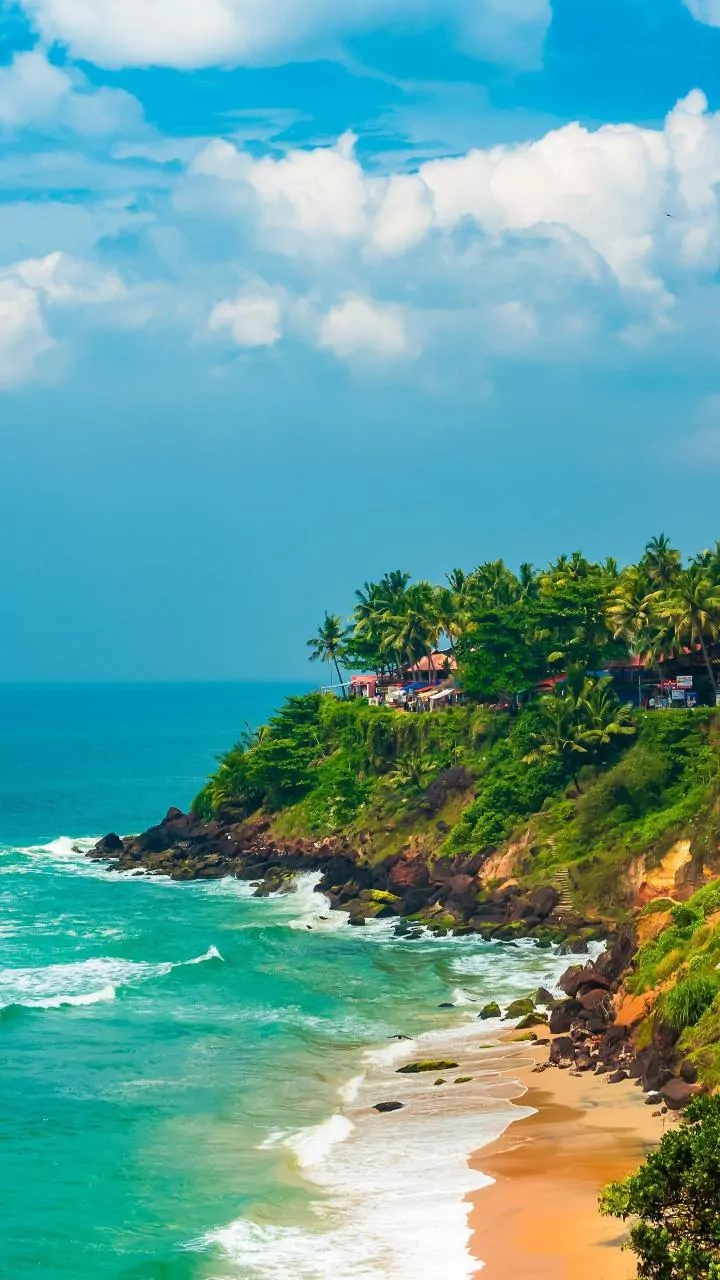
is revered as the nation's lifeblood and the Brahmaputra is often termed the Red River, a less widely recognized river in the south boasts an intriguing European moniker: India's English Channel. This distinctive nickname belongs to the Mahe River, a relatively small yet historically impactful coastal river situated in northern Kerala. In the local Malayalam dialect, it is known as the Mayyazhi River. Its journey begins in the verdant Western Ghats, specifically within Kerala's Wayanad district, where a convergence of several mountain streams gives rise to its flow. Traversing approximately 50 to 55 kilometers, the Mahe River meanders through parts of Wayanad and Kannur before reaching its outlet into the vast Arabian Sea, close to the town of Mahe, which is administratively part of the Puducherry Union Territory. It is at this juncture that the river's physical geography intertwines with its rich historical narrative, earning it its unique appellation.
Colonial Boundary and Strategic Importance
During the era of European colonial powers, the Mahe River played a crucial role as a natural dividing line. The area of Mahe itself was under French administration, while the territories surrounding it were under the dominion of British India. This geographical division caused the Mahe River to serve as a boundary between these two distinct European powers, drawing a parallel to the historical separation provided by the English Channel between France and Great Britain. This comparison is what led to the river being bestowed with its memorable nickname. The river's drainage basin spans an area of approximately 394 square kilometers, with the majority of this territory located within Kerala. During the monsoon season, the river experiences a significant increase in volume as its various tributaries contribute their waters. Near its mouth, the river forms a scenic estuary where the freshwater currents mingle with the saltwater of the Arabian Sea. This confluence creates a fertile environment that is conducive to fish farming and supports the livelihoods of the local communities. Historically, the Malabar coast was renowned for its lucrative trade in black pepper and other spices. The French utilized the mouth of the Mahe River as a strategic point for anchoring their ships and securing merchandise that was being transported along the Arabian Sea trade routes. To safeguard their interests and guard against potential British incursions, fortifications and lookout posts were established on the hilltops overlooking the river, underscoring its considerable strategic value during that period.
Literary Legacy and Cultural Resonance
Beyond its historical significance as a colonial demarcation, the Mahe River holds a deeply cherished place within the realm of Malayalam literature. The celebrated author M. Mukundan masterfully captured the essence of this region and its unique cultural milieu in his highly acclaimed novel, "Mayyazhippuzhayude Theerangalil," which translates to "On the Banks of the Mahe River." Through his poignant narrative, Mukundan vividly portrayed the social fabric of a community profoundly shaped by the long period of French rule and the subsequent struggles for independence. The novel delves into the lives, aspirations, and challenges of the people living along the riverbanks, weaving a story that is intrinsically linked to the waterway itself. This literary work has immortalized the Mahe River, elevating it from a geographical feature to a symbol of cultural identity and historical memory for the people of Kerala. The book's enduring popularity ensures that the river continues to resonate not only as a physical landscape but also as a rich tapestry of human experience and literary artistry, making it far more than just a boundary marker but a source of inspiration and a testament to the enduring power of storytelling.