






Erode: Global Turmeric Hub
Erode, situated in the southern Indian state of Tamil Nadu, has firmly established itself as the undisputed 'Turmeric Capital of the World.' This distinction
is not merely a title; it reflects the region's profound impact on the global turmeric market, driven by its sheer scale of cultivation, the sophistication of its trading mechanisms, and its significant influence on international pricing. Often referred to as the 'Yellow City,' Erode is characterized by extensive turmeric production, processing, and auction activities. The price benchmarks established in Erode's regulated markets serve as critical reference points for turmeric transactions throughout India and consequently impact global export rates. Furthermore, Erode is home to a GI-tagged variety, Erode Turmeric, specifically recognized by the Indian government for its consistently high curcumin content, a key compound associated with turmeric's beneficial properties. This official recognition further solidifies Erode's pivotal role in the worldwide trade of this precious spice.
Reasons for Esteem
Several interwoven factors contribute to Erode's prominent position in the international turmeric arena. A significant volume of turmeric cultivation takes place across Erode and its adjacent districts, making a substantial contribution to Tamil Nadu's overall output. The city boasts one of India's largest regulated turmeric markets, second only to Nizamabad in Telangana, facilitating the influx of produce from various Indian states. The region benefits from highly suitable agro-climatic conditions, including fertile red loamy soil and adequate rainfall, which are conducive to growing high-quality turmeric. Crucially, Erode has developed robust supply chains and extensive export networks, enabling the smooth distribution of turmeric to diverse international markets across Asia, Europe, the Middle East, and the United States. Farmers from surrounding agricultural areas consistently bring their harvest to Erode's regulated markets, reinforcing its status as a central marketplace for transparent auctions and national price determination.
Turmeric Varieties Traded
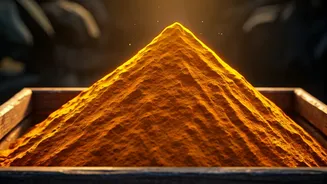
The bustling markets of Erode are instrumental in trading a variety of well-regarded turmeric types and forms. Foremost among these is the indigenous 'Erode turmeric,' which holds a Geographical Indication (GI) tag and is highly prized for its superior curcumin levels, typically ranging between 2.5% and 3.9%. Alongside this, 'Salem turmeric,' cultivated in neighboring districts of Tamil Nadu, is frequently traded and recognized for its quality. The produce is also categorized by its physical form: 'finger turmeric' and 'bulb turmeric.' These different forms are utilized in distinct ways across culinary applications, traditional medicine, and various industrial processes. Each variety traded from Erode is valued not only for its brilliant golden color and enticing aroma but also for its inherent medicinal properties, making the region a comprehensive source for diverse turmeric needs.
Sangli: India's Turmeric Hub
While Erode commands global attention, Sangli in the state of Maharashtra holds the esteemed title of 'Turmeric City of India.' This recognition stems from Sangli's long-standing dominance in turmeric cultivation and trade, particularly within Maharashtra and its surrounding regions. The district is responsible for approximately 70% of Maharashtra's total turmeric production and stands as one of Asia's most significant traditional centers for turmeric commerce. Sangli turmeric also boasts its own Geographical Indication (GI) tag, celebrated for its deep saffron hue and distinct, appealing aroma. The district is home to one of India's oldest organized turmeric auction systems, operational since the early 20th century, which played a pivotal role in bringing Sangli turmeric to national and international prominence. Together, Erode and Sangli form the bedrock of India's turmeric industry, each contributing uniquely to its domestic and global market strength.