
The Luminous Pink Moon
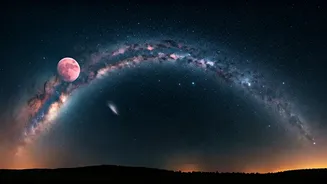
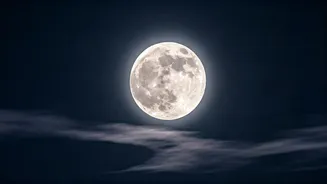
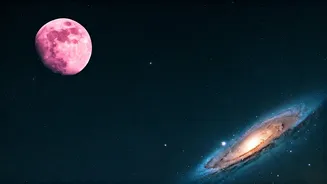
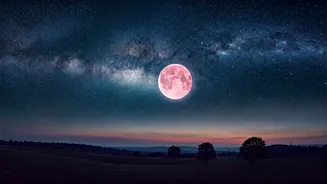
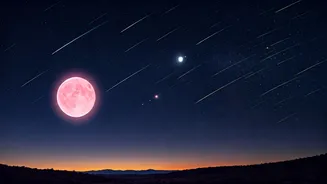
As spring truly blossoms in April 2026, the night sky will be graced by the first full moon of the season, affectionately known as the 'Pink Moon.' This
celestial spectacle, occurring at 10:12 PM ET, derives its name not from its color, but from the vibrant moss pink flowers that typically bloom concurrently in North America. Adding to its allure, the moon will be positioned near its closest orbital point to Earth, creating a 'supermoon' effect. This proximity will make it appear approximately 15% brighter and noticeably larger than usual, offering a truly breathtaking and enhanced viewing experience for all observers.
Mercury's Morning Ascent
April 2026 presents an excellent opportunity to catch a glimpse of Mercury in the pre-dawn sky. The innermost planet will achieve its maximum elongation from the Sun, positioning it prominently in the eastern horizon just before sunrise. Normally elusive due to its proximity to the Sun's glare, this configuration offers astronomers and enthusiasts a clearer window to observe Mercury's surface features and its tenuous atmosphere. This extended visibility is crucial for ongoing studies and appreciating the planet's unique characteristics.
Spectacular Comet Approaching
A 'sun-grazing' comet is set to make a dramatic appearance in April 2026, swinging incredibly close to the Sun, a mere 850,000 miles away. As solar heat envelops the comet, its icy composition will vaporize, generating a brilliant, glowing atmosphere (coma) and an extensive tail. If the comet maintains its structural integrity during this close solar pass, it has the potential to evolve into a magnificent 'Great Comet.' Such an event promises a breathtaking display, potentially becoming visible to the naked eye in the morning sky, offering a rare and unforgettable astronomical phenomenon.
Planetary Conjunction Display
Mark your calendars for a rare cosmic gathering in April 2026 as Mercury, Mars, Saturn, and Neptune align to appear remarkably close together in the night sky. While their visual proximity is striking, it's important to remember that these planets remain millions of miles apart in reality. Such celestial arrangements are invaluable for astronomers, aiding in the precise calibration of telescopes and providing unique insights into the dynamics and orbital mechanics of our solar system, offering a grand perspective on celestial mechanics.
Moon, Venus, Pleiades Trio
Prepare for an aesthetically pleasing celestial event in April 2026 when the Moon, the dazzling planet Venus, and the renowned Pleiades star cluster will present themselves as a tight, beautiful grouping in the sky. These close visual associations, known as conjunctions, are not only a feast for the eyes of casual observers but also serve as significant points of interest for astronomers. They provide excellent opportunities to study planetary movements and the intricate dance of celestial bodies within our cosmic neighborhood.
Lyrid Meteor Shower Peak
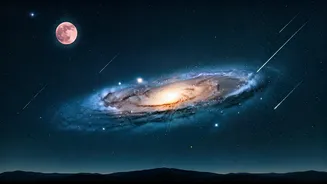
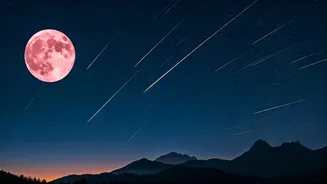
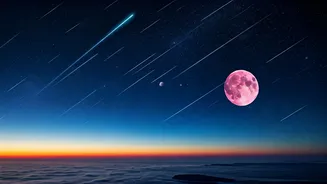
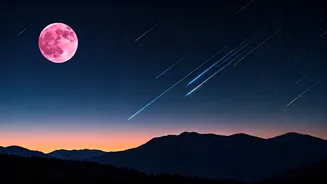
The Lyrid meteor shower will reach its zenith in April 2026, an event stemming from Earth's passage through the dusty trail left behind by Comet Thatcher. As minuscule particles from this ancient comet enter our atmosphere at speeds of approximately 110,000 miles per hour, they ignite, creating brilliant streaks of light across the sky. This shower boasts a long observational history, dating back over 2,700 years, making it one of the most venerable and consistently observed meteor events known to humanity.
Whirlpool Galaxy at Best
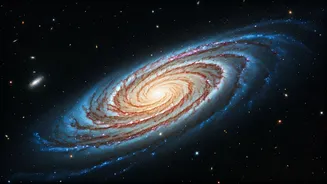
April 2026 offers an unparalleled opportunity to observe the magnificent Whirlpool Galaxy (Messier 51). Situated roughly 31 million light-years from Earth, this grand spiral galaxy is currently engaged in a gravitational dance with its smaller companion, NGC 5195. This dynamic galactic pairing provides astronomers with an exceptional, up-close laboratory to investigate the processes of star formation occurring within the spiral arms of galaxies, offering profound insights into galactic evolution.
Auroras Fade in Spring
As the Northern Hemisphere welcomes longer daylight hours with the arrival of spring, the dazzling display of the Northern Lights is set to diminish. Despite ongoing solar activity, the increased ambient light will unfortunately obscure the auroras from view. This seasonal shift signals the conclusion of the prime aurora-gazing season for the Arctic Circle, marking a natural transition in the sky's visual offerings as the planet moves through its annual cycle.