




The Earthy Foundation of Dabu
Nestled on the outskirts of Jaipur, in the village of Bagru, lies a printing tradition where fabric's journey begins with mud. This is Dabu printing, an
ancient resist-printing technique deeply rooted in Rajasthan's heritage. Unlike modern methods that rely on inks or pigments, Dabu's artistry starts with a unique paste crafted from local clay, lime, natural gum, and wheat chaff. This mud mixture is not merely a medium but the very essence of the design, applied using hand-carved wooden blocks. The process meticulously prepares cotton or chanderi fabrics through thorough scouring and washing, ensuring they are perfectly receptive to natural dyes. Artisans then carefully press these intricately carved teak blocks, coated in the thick mud resist, onto the stretched fabric. This crucial step creates the patterns by protecting specific areas from dye absorption, allowing the true design to emerge through subtraction rather than addition of colour. Each printing house meticulously develops its own mud formula, adapting to local environmental factors like weather and water quality, influencing the precise nature of the resist, whether it yields sharp lines or allows for subtle colour bleed. The vibrant history of Dabu is intrinsically linked to the Chhipa community, who have perfected this craft for generations, with the name itself deriving from the Hindi word 'dabana,' meaning 'to press.'
Crafting Patterns with Mud and Sky
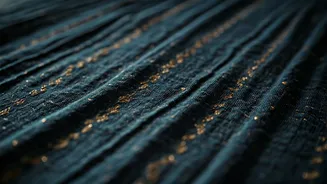
Following the application of the mud resist, a vital step involving fine sawdust is employed to secure the wet print. This dusting prevents smudging and ensures the mud remains intact during the subsequent handling and dyeing phases. The core principle of Dabu lies in its subtractive nature; the pattern is defined by the areas *not* dyed, rather than those coloured. Initially, the design exists as the untouched fabric, a canvas awaiting the dye. The full visual language of Dabu gradually unfolds through a cyclical process of drying, dyeing, washing, and oxidation. Once printed, the fabric is left to dry under the open sky, allowing the Rajasthani climate to play a significant role. The desert heat helps to effectively seal the mud onto the cloth, while wind influences drying speed and humidity impacts the fabric's absorption capabilities. This natural synergy between artisan and environment is paramount. The textile then undergoes natural dyeing, where it's immersed in vats prepared through natural fermentation processes, often involving ingredients like jaggery and plant-derived indigo. For instance, fabric dyed with indigo might emerge a greenish hue before atmospheric oxygen triggers a transformation into a rich blue. Multiple dyeing dips result in progressively deeper shades and nuanced tonal variations. The distinctive reveal of the Dabu print occurs during the final washing stage, where the dissolved mud uncovers the fabric's original, undyed portions, creating a striking contrast against the dyed background. The inherent imperfections, such as minor mud cracks allowing subtle dye seepage, slight variations in block pressure, and the natural texture of the fabric, all contribute to the unique, handcrafted character of Dabu textiles.
Dabu's Evolution in Fashion
Traditionally, Dabu printing motifs often drew inspiration from nature, featuring floral patterns, intricate jaals (latticework), mango shapes, and representations of desert flora. However, contemporary designers are shifting the focus, emphasizing texture, spacing, and the inherent movement of the fabric itself. This evolution sees expansive areas of undyed cloth juxtaposed with fields of washed indigo, yielding garments that possess a remarkable lightness despite the labor-intensive process involved. The relationship between Dabu and the fashion industry has transformed significantly. Previously associated with heavy, rustic fabrics and traditional attire, Dabu is now being reinterpreted on lighter materials like sheer chanderi, airy cotton mesh, and organza. Fluid silhouettes are becoming commonplace, and indigo hues are often presented in softer, more muted tones – appearing faded, smoky, or clouded rather than intensely saturated. This adaptability stems from the craft's organic irregularity and inherently breathable structure, making it a natural fit for modern wardrobes. Furthermore, Dabu printing aligns with environmental consciousness. Its ecosystem is defined by natural dyes, sun-drying, manual labor, and low-energy production methods. Water consumption is primarily for washing and dyeing, and artisans continue to utilize locally sourced materials. The pace of Dabu production is dictated by natural rhythms—climate and human touch—rather than industrial speed. In an era dominated by digital precision, Dabu printing powerfully preserves the evidence of human touch. Every stage, from mud cracking and dye bleeding to the pressure of the block, leaves physical traces that imbue the fabric with the textures of earth, water, and labor, fostering a profound dialogue between the natural world and textile art.