







The Stair Climbing Strain
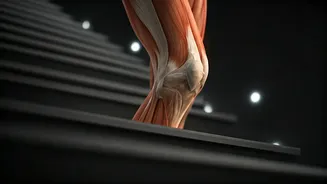
Climbing stairs presents a significantly greater biomechanical challenge to your knees compared to walking on a level surface. This increased demand stems
from the deeper flexion required, which in turn intensifies the pressure exerted on the patellofemoral joint – the articulation between your kneecap and thigh bone. Dr. Rakesh Nair, a Consultant Knee Replacement Surgeon, explains that this heightened pressure is a primary driver of knee discomfort during stair use. Unlike the relatively lower forces experienced during flat walking, ascending or descending stairs necessitates that your kneecap bear a larger proportion of your body's weight as your knee joint bends more acutely. This specific loading pattern is often the key differentiator between experiencing pain during stair use and feeling no discomfort during everyday walking.
Indications of Early Stress
The distinct pattern of knee pain occurring solely during stair climbing, yet absent during ordinary walking, often serves as an early indicator of underlying knee joint stress. This isn't typically a random occurrence but rather a signal that your knee joint is experiencing a higher load during specific activities. Dr. Nair highlights that this phenomenon can be indicative of Patellofemoral Pain Syndrome (PFPS), a common condition characterized by pain around or behind the kneecap. In PFPS, the kneecap does not track smoothly in its groove on the thigh bone, leading to increased pressure and irritation, particularly when the knee is bent under load, as is the case with stair climbing. Because walking on flat ground imposes considerably less strain, the pain remains unnoticeable during such activities, masking the early signs of this condition.
Underlying Contributors to Pain
Several factors can contribute to the discomfort felt specifically when climbing stairs. Beyond the commonly cited Patellofemoral Pain Syndrome, early-stage Osteoarthritis, which involves the gradual wear and tear of cartilage, can also manifest as pain during activities that load the joint. The cartilage that cushions the underside of the kneecap can become worn, leading to friction and pain as the kneecap glides over the thigh bone. Furthermore, issues with the supporting musculature, such as weakness in the quadriceps (thigh muscles), can disrupt proper knee alignment. When these muscles are not strong enough to stabilize the kneecap effectively, it can lead to maltracking and increased pressure points, exacerbating discomfort during movements like stair climbing. Even subtle misalignments in the knee joint can play a role in this specific type of pain.
Strategies for Relief
Fortunately, alleviating knee pain associated with stair climbing is often achievable through consistent and targeted interventions. A cornerstone of effective management is strengthening the muscles that support the knee, particularly the quadriceps. Developing robust thigh muscles can significantly improve kneecap stability and promote smoother tracking, thereby reducing friction and pressure. Maintaining a healthy body weight is also crucial, as excess weight places additional stress on the knee joints, especially during loaded movements like climbing stairs. Implementing proper stair technique, such as taking slower, more deliberate steps and utilizing handrails for support, can also help distribute the load more evenly and minimize strain. These proactive measures can lead to a noticeable reduction in discomfort and improved knee function over time.