







The 'Petri Dish' Reputation
Even before the widespread awareness of viruses like Hantavirus in 2026 and the global lockdowns of 2020, cruise ships were already widely recognized for their
propensity to become breeding grounds for illness, earning them the unflattering moniker of 'petri dishes.' This reputation stems from the inherent nature of cruise travel: close proximity among passengers and crew, shared dining spaces, and extensive use of common facilities create an environment ripe for the rapid transmission of infectious agents. Historical outbreaks, ranging from common gastrointestinal viruses to more serious pandemics, have repeatedly demonstrated that once a pathogen gains a foothold on a vessel, containment becomes an immense challenge. The cruise industry has faced these issues for years, with incidents predating recent headlines serving as stark reminders of the vulnerabilities present in these enclosed, high-density travel settings. The recurring nature of these events underscores the ongoing need for stringent health protocols and swift responses to emerging threats.
Norovirus: The Persistent Threat
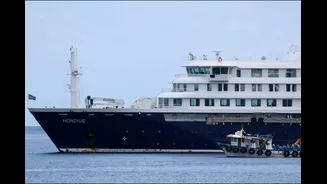
For many years, Norovirus has been the most commonly associated illness with cruise ship voyages, a highly contagious gastrointestinal virus that thrives in the communal settings of a liner. Although cruise ship outbreaks represent a minuscule fraction of total global Norovirus cases, health authorities scrutinize them intensely due to the concentrated environment. For instance, a recent outbreak on the Caribbean Princess affected over 100 individuals during a 13-night journey, as reported by NBC News citing the CDC. This follows a similar incident in early 2020 on the same ship, where over 400 passengers became ill across two trips, highlighting that 'old-school' pathogens remain a significant hazard. The MV Hondius outbreak also brought renewed attention to how concentrated travel settings, like cruise ships, can escalate even rare infections when detection is delayed. Analysis of historical studies reveals a significant number of recorded norovirus outbreaks on cruise ships, primarily driven by contaminated surfaces, foodborne transmission, and rapid person-to-person spread. Ships like Celebrity Mercury and Explorer of the Seas have become synonymous with such incidents, not due to their uniqueness but because they exemplify the perfect conditions for viruses to flourish through close contact and shared amenities.
Diamond Princess: A Quarantine Failure
In February 2020, the Diamond Princess tragically became the emblematic face of the pandemic's initial chaos. Following the detection of a single passenger's positive test, the entire ship was placed under quarantine off the coast of Yokohama, Japan. This strategy, intended to contain the virus, proved counterproductive. The pathogen infiltrated the ship's systems, spreading through air vents and corridors, ultimately infecting a staggering 712 out of the 3,711 individuals on board. With 14 fatalities and an infection rate reaching approximately 20%, the Diamond Princess offered a chilling global demonstration of how rapidly a virus can propagate within an isolated, enclosed space, illustrating the critical importance of effective quarantine protocols and robust onboard medical infrastructure.
Ruby Princess & Nile River Issues
While the Diamond Princess incident served as a lesson in flawed quarantine strategies, the Ruby Princess in Australia highlighted issues with timing and decision-making. In March 2020, over 2,600 passengers were disembarked in Sydney before their COVID-19 test results were finalized. This decision later linked the ship to over 900 cases and 28 deaths, effectively seeding the virus within the Australian community. Even serene river journeys were not immune; a cluster of 45 cases was identified on the MS River Anuket, proving that smaller riverboats carry similar risks to their larger ocean-going counterparts. These events underscored the universal vulnerability of enclosed travel environments to infectious diseases, regardless of the vessel's size or location, emphasizing the need for consistent safety measures across all forms of cruise travel.