





The Rise of Shrekking
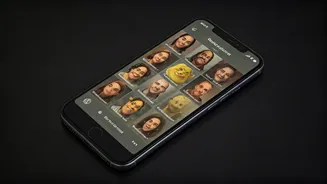
In the evolving landscape of modern romance, a new trend known as 'Shrekking' has emerged among Gen Z, sparking widespread conversation across social media
platforms. This approach involves consciously pursuing romantic partners perceived as less conventionally attractive, with the underlying assumption that such individuals are more likely to exhibit greater loyalty and commitment. The rationale behind Shrekking is a reaction against the often frustrating experiences of dating conventionally attractive individuals who may exhibit less desirable relationship behaviors, such as inconsistency or emotional unavailability. Instead of chasing fleeting appearances, proponents of Shrekking seek partners who might compensate for perceived lower aesthetic appeal with dependable character traits, prompt communication, and an absence of the 'situationship' drama that has become a common feature of contemporary dating. The trend's name, inspired by the beloved ogre character from the 'Shrek' franchise, highlights the appeal of a partner who, despite not fitting traditional beauty standards, offers deep affection and unwavering devotion.
TikTok's Role in Shrekking
The phenomenon of Shrekking has gained significant traction and visibility through platforms like TikTok, where short-form video content has become a powerful vehicle for disseminating cultural trends and personal narratives. Users began sharing experiences and observations about dating, often contrasting superficial but unreliable romantic interests with more dependable but less conventionally striking partners. The 'Shrek' analogy quickly resonated, as the character's fierce loyalty to Fiona, who also doesn't conform to traditional fairy-tale beauty norms, serves as a compelling metaphor for the trend's core principle: prioritizing commitment and steadfastness over conventional attractiveness. This trend is part of a broader pattern within Gen Z dating culture, which has also coined terms like 'the ick,' 'beige flags,' and 'monkey-barring' to describe various relationship dynamics and pitfalls. After witnessing countless relationship narratives unfold on reality television and navigating their own 'talking stages,' many young adults are re-evaluating their priorities, realizing that physical appeal often diminishes in significance when juxtaposed with a partner's reliability and emotional maturity. The emphasis shifts from 'how good do they look?' to 'will they be there for me?'
Substance Over Surface
At its most constructive, Shrekking represents a significant shift in dating priorities, steering the focus towards deeper qualities and emotional substance rather than superficial appearances. It's a collective declaration from Gen Z that they are weary of the emotional toll exacted by romantically unavailable individuals who often possess a strong 'main character' persona. The act of dating someone perceived as steady and dependable is celebrated as a victory, championing loyalty and genuine connection over fleeting aesthetic appeal, akin to an unconventional 'swamp romance' as opposed to the often hollow pursuits found in casual dating apps. However, this trend is not without its complexities and often stems from deeper psychological roots, frequently linked to past experiences and insecurities. For some, the decision to date someone perceived as 'below their league' can be a subconscious strategy to ensure safety and avoid the pain of rejection or abandonment, a form of defensive dating. The internal narrative might be one of expanding horizons, but it can paradoxically lead to further hurt if the 'safe' choice ultimately proves to be unreliable or causes emotional pain, leaving the individual questioning their judgment and the effectiveness of their strategy.
The Downsides of Shrekking
While Shrekking can be a well-intentioned attempt to find stability in relationships, it carries significant potential drawbacks that can lead to unexpected negative outcomes. A primary concern is that the trend often originates from a place of insecurity or unresolved past trauma, where individuals may deliberately 'date down' as a perceived risk-mitigation strategy. This can manifest as a subconscious belief that by choosing someone less desirable, they will be less likely to be left or hurt. However, this approach can backfire, leading to resentment if genuine attraction and a deep spark never materialize. Furthermore, categorizing potential partners into 'leagues' inherently dehumanizes individuals, reducing them to a quantifiable status rather than recognizing their unique qualities and potential for a genuine connection. In essence, this method can transform dating into a strategic game of perceived power dynamics, rather than an organic exploration of compatibility. When the 'safe' choice ultimately causes pain or disappointment, it can exacerbate existing insecurities and lead to a deeper sense of heartbreak than if a more conventional approach had been taken. This can result in individuals feeling trapped in relationships lacking genuine passion or being subjected to further emotional distress when the anticipated loyalty proves elusive.
Beyond Shrekking: True Connection
The widespread adoption of Shrekking underscores a profound exhaustion with the superficiality and commodification of modern dating, particularly as perpetuated by dating apps. These platforms often reduce individuals to a series of metrics – appearance, age, income – creating a hierarchical system that can subtly reinforce biases. While initial attraction is undeniably a factor in romantic connections, it is the depth of connection and shared values that ultimately sustain a relationship. Shrekking, while potentially highlighting the need for substance, is not the ultimate solution. True relationship growth, or 'the glow-up,' is an internal process that involves healing from past hurts, shedding defensive behaviors, and cultivating self-awareness, potentially with the guidance of a therapist. Taking breaks from dating, reflecting on personal desires, and understanding what one truly seeks in a partner are crucial steps. While the frustrations of modern dating, such as ghosting, are valid, placing oneself on a pedestal by demeaning others is counterproductive and perpetuates unhealthy dynamics. Gen Z's reevaluation of love, moving from a chase-based model to one prioritizing depth and authenticity, is a positive evolution. However, success in this new approach is contingent on building from a foundation of self-love and genuine confidence, rather than fear or strategic self-protection. The goal should be to seek partners who resonate with one's soul, not merely to secure a sense of safety.