






Orbiting Upgrades Arrive
Living and working in the vacuum of space presents unique challenges, and a sluggish computer is certainly not ideal when you're managing critical missions.
Recognizing this, a major computer overhaul is underway for the crew of the International Space Station. This initiative, dubbed the Expedition 74 crew review, began with the replacement of network servers, paving the way for the introduction of considerably more potent laptop computers. This isn't merely a routine equipment swap; it reflects the evolving demands of modern space exploration, which now encompass intricate scientific research, high-resolution imaging, seamless communication, detailed logistics management, and continuous system monitoring. All these operations stand to benefit immensely from the enhanced processing capabilities of these new machines, ensuring the station remains at the forefront of technological capability in orbit.
Next-Gen Space Workstations
The forthcoming computing platform for the ISS has been identified as a powerful mobile workstation. These advanced machines are poised to succeed the current generation of laptops in use, which are already robust but are now being phased out. The initial deployment of these newer systems occurred in October 2025, marking a significant leap forward in onboard computational power. The upgrade is crucial because, while the ISS has historically relied on exceptionally durable and mission-proven hardware, the complexity of its operations has grown exponentially. Modern space endeavors require substantial processing power for everything from sophisticated data analysis in scientific experiments to real-time video streaming and complex system diagnostics. This technological refresh ensures that astronauts are equipped with tools capable of meeting these ever-increasing demands, maintaining the ISS's role as a cutting-edge research facility.
Unpacking the Powerhouse Specs
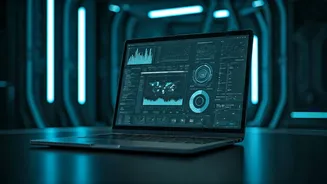
The new laptops destined for space are far from ordinary consumer devices; they are workstation-grade systems engineered for maximum performance. In their custom configuration for the space station, these machines boast an impressive Intel Core Ultra 9 vPro HX processor, coupled with an Nvidia RTX Pro Blackwell GPU. Complementing this, they are equipped with a substantial 128GB of DDR5 memory and four 2TB NVMe SSDs for rapid data storage and retrieval. While these specifications are exceptionally high and not commonly found on laptops used on Earth, their operation in orbit requires special adaptations. A unique NASA-exclusive AC/DC power adapter has been developed, as the ISS primarily runs on direct current (DC) power, rendering standard AC chargers used on Earth incompatible with the station's electrical system. This attention to detail ensures the seamless and reliable functioning of these powerful devices in the unique extraterrestrial environment.
A New Era of Computing
With over 100 HP workstations already integrated and actively utilized on the ISS, alongside specialized printers designed for microgravity, these new mobile workstations represent the third generation of computing platforms provided by the manufacturer. This significant hardware refresh comes at a pivotal time, as the International Space Station is scheduled for deorbiting in the coming years. Therefore, this substantial PC upgrade may well be one of the last major advancements in onboard computing technology before the station's eventual decommissioning. The introduction of these high-performance machines underscores the commitment to maximizing the scientific and operational output of the ISS in its remaining operational lifespan, ensuring astronauts have the most advanced tools available for their critical missions and research endeavors.