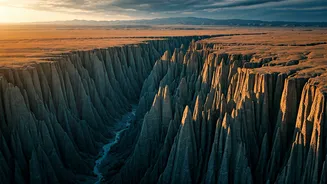







Asia's Colossal Rift
Asia is home to some of the most remarkable geological formations on Earth, and among them, the Great Rift Valley stands out as a truly colossal feature.
Often cited as the largest valley on the continent and a significant global geological spectacle, its sheer scale is breathtaking. This vast expanse of low-lying land, nestled between imposing mountains and hills, owes its existence to powerful, slow-moving geological forces. Specifically, it is a direct result of the monumental shifts and separations occurring between Earth's tectonic plates over millions of years. The continuous movement and interaction of these colossal plates have fundamentally reshaped the planet's crust, carving out this immense valley that stretches across considerable distances, influencing the topography and character of the regions it traverses.
A Landscape in Motion
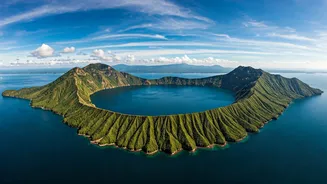
The Great Rift Valley is far more than just an empty space between mountains; it's a dynamic and diverse geographical area teeming with significant natural elements. This expansive region is characterized by a rich tapestry of features, including numerous large lakes, towering mountain ranges, and areas of intense volcanic activity. Its very formation is intricately linked to the ongoing process of the Earth's crust pulling apart, a phenomenon that has been underway for eons. This constant geological evolution means the valley is not a static entity but a living, breathing landscape that continues to change and adapt. The presence of active volcanic regions, alongside other geothermal phenomena, further underscores the immense subterranean forces at play beneath this incredible valley.
Vital Waterways and Peaks
Within the vast embrace of the Great Rift Valley lie crucial lifelines and dramatic geological landmarks. The valley is punctuated by a variety of significant natural features, including essential water sources like rivers and expansive lakes, which are vital for both ecosystems and human populations. Furthermore, the region is home to striking volcanic mountains, testament to the intense geological activity that shaped and continues to influence this area. These combined elements—the flowing waters and the formidable peaks—render the Great Rift Valley one of the planet's most geologically important and awe-inspiring structures. Its significance extends beyond mere physical presence, highlighting the complex interplay of forces that create and sustain such grand landscapes.
Evolving Earth's Sculpture
The dramatic contours and features of the Great Rift Valley have been profoundly shaped by ongoing volcanic processes. Intense volcanic activity has played a crucial role in constructing the valley's unique structure, contributing to the varied terrain and geological formations found within its boundaries. This formative volcanic influence is not a relic of the distant past; the valley is a testament to the Earth's dynamic nature, as it continues to evolve due to persistent geological changes. The forces that created it are still active, suggesting that the valley's landscape will continue to transform over geological timescales, offering a unique window into the Earth's continuous process of self-sculpting and renewal.
Bounty for Humanity
Beyond its geological marvels, the valleys of Asia, including the Great Rift Valley, are indispensable to the sustenance and development of human civilization. These fertile depressions are particularly crucial for agriculture, providing ideal conditions for farming. The rich soil deposited over millennia, combined with reliable water sources originating from the valley's rivers and lakes, creates an environment where crops can flourish. This makes valleys prime locations for human settlement, supporting communities and economies. Their capacity to provide food and resources has been fundamental to the growth and prosperity of societies across the continent for centuries.
Biodiversity's Haven
Valleys, with their unique microclimates and abundant resources, serve as critical sanctuaries for a diverse array of plant and animal life. The fertile land and readily available water within valleys like the Great Rift Valley create thriving natural ecosystems. These environments support a rich biodiversity, providing habitats for countless species. The geographical significance of these landforms extends beyond their role in agriculture and human settlement; they are vital components of the continent's ecological fabric, playing a crucial role in maintaining the balance of nature. Their importance as natural preserves underscores their intrinsic value and the need for their conservation.