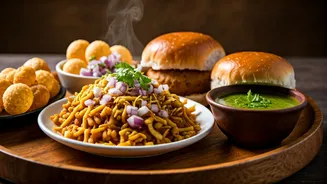







Vada Pav: The King
Often hailed as Maharashtra's unofficial national dish, the vada pav is an indispensable Mumbai icon. It features a spicy potato fritter, known as a batata
vada, coated in gram flour batter and deep-fried to a perfect golden crisp. This is then nestled inside a soft, fluffy white bun called pav, accompanied by a trio of essential chutneys: a fiery dry garlic chutney, a fresh green coriander-mint chutney, and a sweet, tangy tamarind chutney. A fried green chili on the side provides an optional kick. Its origin dates back to the early 1970s when Ashok Vaidya, a street vendor near Dadar station, ingeniously created it to offer a quick, affordable, and satisfying meal for the city's textile mill workers. Initially priced at a mere ₹0.10-0.15, its popularity soared, even being championed by political parties as a symbol of the working class. The magic of vada pav lies in its delightful textural contrast—the crispiness of the fried vada against the softness of the pav, all enhanced by the bold flavours of the chutneys. You can find excellent vada pav at stalls across Mumbai, but the original Ashok Vada Pav opposite Kirti College in Dadar West is a legendary starting point. The true test, however, is to look for stalls with long queues of locals; they invariably know where the best ones are.
Misal Pav: Spicy Kick
For those with a palate for adventure, misal pav is an absolute revelation. It's a deeply flavourful and intensely spicy curry made from sprouted moth beans, simmered with onions, tomatoes, and a potent spice blend that can vary significantly by region. This rich gravy is generously topped with farsan, a crunchy mixture of fried savory snacks, along with finely chopped onions, fresh coriander, and a squeeze of lime. It's served alongside buttered pav, perfect for soaking up the fiery goodness. Regional variations abound: Kolhapuri misal is notorious for its intense heat, often leading to a delightful drenching in sweat. Pune's version tends to be a bit milder, often featuring more farsan, while Nashik offers a tangier profile. The appeal of misal pav lies in its symphony of textures—the tender sprouted lentils, the crispiness of the farsan, the freshness of the onions, and the yielding pav all combine for a unique eating experience. Moreover, it's a surprisingly nutritious choice, with sprouted lentils being an excellent source of protein. Traditionally a breakfast dish, it's potent enough to invigorate your senses, making it a fantastic way to start the day. Renowned establishments like Aaswad in Dadar West, Mumbai, and Bedekar in Pune are celebrated for their exceptional misal pav.
Pav Bhaji: Butter Bliss
Pav bhaji stands as Maharashtra's ultimate comfort food, a dish that embodies pure indulgence. At its heart is a thick, rich vegetable mash, known as bhaji, meticulously prepared with an abundance of butter and a special pav bhaji masala. This flavourful concoction is created by simmering mashed potatoes, tomatoes, peas, cauliflower, and capsicum until they meld into a velvety consistency. This is served with pav that's been expertly toasted on the same griddle, each side slathered with generous amounts of butter. The origins of pav bhaji trace back to the 1850s in Mumbai, where enterprising street vendors sought an innovative way to utilize leftover vegetables at the end of the day. By mashing and spicing them with butter, they created an affordable and satisfying meal for late-working textile mill employees. What began as a practical solution has since evolved into a beloved culinary icon. The sheer quantity of butter is what truly elevates pav bhaji; vendors renowned for their delicious versions spare no expense, adding it during the cooking of the bhaji, while toasting the pav, and often as a final decadent dollop. To truly enjoy pav bhaji, mix the bhaji and pav together on your plate, allowing the bread to absorb all the luscious flavours. For an unforgettable experience, visit Sardar Refreshments on Tardeo Road in Mumbai, a legendary spot serving exceptional pav bhaji since the 1960s.
Bhel Puri: Crunchy Delight
Considered Mumbai's quintessential beachside snack, bhel puri is a vibrant medley of textures and tastes. It consists of puffed rice as its base, generously mixed with sev (thin, crispy chickpea flour noodles), finely chopped onions, tomatoes, diced boiled potatoes, and sometimes a hint of raw mango for tartness. These ingredients are all tossed together with sweet tamarind chutney and tangy green chutney, then finished with a sprinkle of fresh coriander and a squeeze of lemon juice. It is typically served in convenient paper cones or small plates, perfect for enjoying on the go. The brilliance of bhel puri lies in its dynamic interplay of textures: the puffed rice retains its satisfying crunch, the sev adds an extra layer of crispiness, the soft potatoes provide a grounding element, and the fresh vegetables offer a welcome bite. All of this is unified by the sweet, spicy, and tangy notes from the chutneys, ensuring that each mouthful is a unique and exciting experience. A crucial rule for enjoying bhel puri is to consume it immediately after it's prepared. The moment the chutneys meld with the puffed rice, a race against sogginess begins, usually lasting only 5-10 minutes. This is why vendors meticulously prepare each serving fresh for every customer. You can find excellent bhel puri at any of Mumbai's famous beaches, including Juhu, Chowpatty, and Girgaon, with Babulnath Bhel near the Hanging Garden also being a popular choice.
Pani Puri: Bursting Flavors
Known by different names across India—gol gappa in Delhi and phuchka in Kolkata—Maharashtra's version, pani puri, is an electrifying culinary experience. It involves small, hollow, crispy puris that are filled with a flavourful spiced water (pani), along with a mixture of mashed boiled potatoes and chickpeas, and various chutneys. The true magic unfolds when you place the entire puri into your mouth; it bursts, releasing a sensational cascade of sweet, tangy, and spicy liquid. The typical way to enjoy pani puri is not by sitting down, but by standing at the vendor's cart, where they serve you one perfectly filled puri at a time. You consume it in a single, delightful bite, and immediately, the next one is handed to you. This process continues until you indicate you've had enough or the vendor runs out of the delicious fillings. Most vendors offer a choice between 'teekha' (spicy) pani and 'meetha' (sweet) pani, and some even expertly alternate between the two for a varied experience. For the truly daring, a full teekha is the ultimate challenge, while the more cautious might opt for the sweet version, and the wise choose a combination of both. The best pani puri stalls are often found near colleges, offices, and bustling markets, easily identifiable by the longest queues, a sure sign of quality and popularity.
Ragda Pattice: Filling Treat
Ragda pattice artfully bridges the gap between a casual snack and a substantial meal, offering a deeply satisfying experience. It features crisp potato patties, known as pattice, generously topped with a warm, spicy white pea curry called ragda. The dish is then finished with a medley of classic chaat accompaniments: assorted chutneys, a sprinkle of sev for crunch, finely chopped onions, and fresh coriander. This combination creates a delightful textural contrast between the firm, crispy pattice and the soft, flavourful ragda, making each bite a pleasure. Ragda pattice is particularly appealing because it's filling without feeling overly heavy, providing a good source of protein from the white pea curry and comfort from the potato patties. The addition of chutneys, sev, and onions brings in all the familiar sweet, tangy, spicy, and crunchy elements characteristic of Indian chaat. It's an ideal evening snack, substantial enough to keep hunger at bay until dinner, yet not so dense that it interferes with later meals. You can find excellent ragda pattice at popular Mumbai locations like Juhu Chowpatty and various other food lanes, especially as the evening sets in.
Sabudana Vada: Crispy Snack
Sabudana vada is a unique and popular deep-fried snack crafted from soaked tapioca pearls. These pearls are mixed with mashed potatoes, crushed roasted peanuts for a delightful crunch, and a blend of aromatic spices, including ginger, green chilies, and coriander. The mixture is then shaped into patties and deep-fried until it achieves a beautiful golden-brown crisp exterior while maintaining a soft, slightly chewy interior. Sabudana, or tapioca, holds significance in Hindu fasting traditions, as it is permitted during observances like Navratri, making these vadas a favoured choice for those days. However, their exceptional taste and texture have led to them being enjoyed year-round by many. The signature characteristic of a well-made sabudana vada is its dual texture: a satisfying crispness from the fried peanuts on the outside, and a distinctively soft, slightly glutinous interior provided by the tapioca pearls. This makes it unlike any other fried snack. Sabudana vadas are best savoured hot, typically served with a side of cooling yoghurt or zesty green chutney.
Kanda Bhaji: Monsoon Treat
Kanda bhaji, essentially crispy onion fritters, is a beloved snack that holds a special place in Maharashtrian cuisine, especially during the monsoon season. Thinly sliced onions are coated in a spiced chickpea flour batter, infused with seasonings like turmeric, chili powder, and carom seeds, and then deep-fried until perfectly golden and crunchy. The onset of the monsoon season in India often sparks a craving for hot, fried delicacies, and kanda bhaji, paired with a steaming cup of masala chai (spiced tea), becomes a cherished ritual across Maharashtra. The combination of the warm, crispy bhajis and the aromatic tea, enjoyed while the rain falls outside, provides an unparalleled sense of comfort and coziness. The flavour profile is particularly special: the natural sweetness of the onions intensifies when fried, harmoniously balancing the spices in the batter. An ideal kanda bhaji should boast a crisp exterior with discernible layers of onion within, avoiding a dense, doughy texture. They are typically served with a side of green chutney or sweet tamarind sauce, making them the perfect accompaniment to a hot cup of chai.
Poha: Breakfast Staple
Poha, made from flattened rice flakes, is a quintessential Maharashtrian breakfast dish that is both light and remarkably satisfying. The flakes are gently sautéed with tempering ingredients like mustard seeds, curry leaves, turmeric for colour, green chilies for a hint of heat, and onions for sweetness. It is then typically garnished with roasted peanuts for a delightful crunch, fresh coriander for vibrancy, and a squeeze of lemon juice to brighten the flavours. Poha stands out as a rare Indian breakfast option that manages to be filling without feeling heavy; unlike richer options like parathas, it doesn't sit heavily in the stomach, yet provides sustained energy until lunchtime. The harmonious blend of the soft, fluffy rice flakes, the crunchy peanuts, and the zesty lemon creates a wonderfully refreshing start to the day. Variations include 'kanda poha' (with generous amounts of onion), 'batata poha' (incorporating potatoes), 'dadpe poha' (an uncooked version where soaked flakes are mixed with ingredients), and the popular 'Indori poha' which features sev and pomegranate seeds. Poha is unequivocally a morning meal; enjoying it at any other time of day feels fundamentally incorrect.
Thalipeeth: Nutritious Pancake
Thalipeeth is a wholesome and deeply traditional savoury pancake, celebrated for its nutritional value and hearty flavour. It's crafted from a unique blend of various flours, typically including rice, jowar (sorghum), bajra (pearl millet), wheat, and chickpea flour. This flour mixture is then combined with a medley of spices, grated vegetables like onions and carrots, and fresh coriander, before being cooked on a griddle (tawa) until it develops a satisfyingly crispy exterior. What sets thalipeeth apart from more common flatbreads like parathas or dosas is its multigrain composition, which significantly boosts its nutritional content and imparts a complex, earthy taste profile. The inclusion of grated vegetables not only adds flavour but also contributes moisture, ensuring the pancake remains tender. It’s a comforting dish that is genuinely beneficial for health. Thalipeeth is traditionally enjoyed with a generous dollop of white butter and a side of yoghurt, or alternatively, with 'thecha,' a fiery chutney made from green chilies, garlic, and peanuts. You can find authentic thalipeeth at restaurants that specialize in Maharashtrian home-style cooking, or from vendors who focus on traditional breakfast fare.