





A Tourist's Travail
An Indian tourist from Visakhapatnam recently shared a harrowing experience on Instagram that highlighted potential challenges for travelers in Southeast
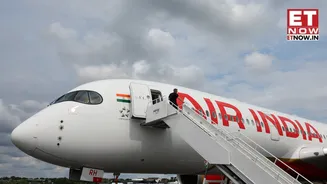
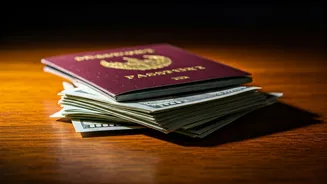
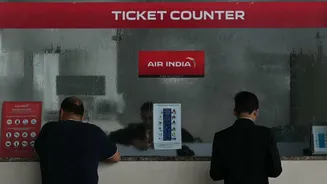
Asia. Flying from Bangkok to Siem Reap in Cambodia, she had no issues with her visa-on-arrival, which she paid for using her card. However, her return journey from Luang Prabang International Airport in Laos to Cambodia took a distressing turn. Airline officials demanded she present 400 US dollars in cash, a sum equivalent to approximately Rs 40,000, as proof of funds. Despite offering multiple forms of verification, including bank statements, her travel history, and proof of her prior cashless entry into Cambodia, she was denied boarding. The traveler expressed her dismay, describing the demand as humiliating and questioning the legitimacy of the rule, noting that airline staff showed her a screenshot from a messaging group as their source of information. She also mentioned that upon entering Laos from Cambodia via land border, she was compelled to purchase a return flight ticket, ostensibly due to fears of illegal entry and employment.
Shared Experiences & Scrutiny
Following the initial traveler's account, numerous social media users shared similar distressing encounters. One user recounted being asked to show $800 in cash when flying from Bangkok to Cambodia, noting that a Chinese tourist traveling with them was not subjected to the same scrutiny. Another Chinese traveler corroborated these experiences, stating they were asked for $500 in cash when flying from Cambodia to Thailand and faced inquiries about return tickets and cash demands when entering Cambodia from Thailand. Conversely, some users defended stricter immigration rules, attributing them to perceived 'supremacist attitudes' of some Indian travelers and suggesting that more countries might adopt stringent entry policies for Indians. This diverse range of reactions underscores a complex perception of Indian travelers and varying adherence to immigration protocols across different nationalities.
Official Rules vs. Reality
An examination of official guidelines from the Indian Ministry of External Affairs reveals that Cambodia offers a visa-on-arrival facility for Indian nationals. The requirements for a tourist or business visa on arrival include confirmed hotel bookings or accommodation details and return flight tickets. Crucially, the MEA website notes that Cambodian Immigration Police 'may ask to show some cash in USD (minimum USD 500$ for each passenger).' However, for Laos, the entry criteria listed on the same page are notably blank, offering no specific guidance. This disparity between official documentation and the on-ground experiences of travelers, particularly the subjective 'may ask' clause regarding cash, creates ambiguity and potential for arbitrary enforcement by immigration officials.
Expert Insights on Cash Proof
GS Bawa, Secretary General of the Air Travellers Association and former GM of the Airports Authority of India, clarified the situation regarding cash requirements. He stated that there is no explicit law mandating travelers to carry a specific amount of cash, such as $400. However, he confirmed that immigration officers, particularly in countries like Cambodia, have the discretion to request proof of funds. This proof can encompass cash, credit cards, or bank statements, intended to assure them that the traveler can financially support their stay. Bawa indicated that travelers of certain nationalities might be asked to demonstrate funds ranging from $500 to $1000, although this is not a universally applied rule. He emphasized that carrying some US dollars in cash, along with accessible bank statements and credit cards, is a prudent measure for genuine tourists.
Strategic Travel Advice
Beyond merely carrying cash, Bawa offered further practical advice for international travel. He highlighted the importance of having crisp, clean, and undamaged US dollar notes, as torn or soiled bills are often rejected. For countries with dollarized economies, US dollars are widely accepted. Travelers are also reminded of the declaration rule, which requires reporting foreign currency exceeding $10,000. Bawa stressed that strategic planning encompassing visas, immigration procedures, and currency management is essential for a smooth journey. He acknowledged that countries implement such requirements based on their experiences with different traveler demographics, often in their own interest or for the benefit of the travelers themselves. He advocated for clearer and more accessible public dissemination of these rules to minimize inconvenience for legitimate travelers.