




The February Snow Moon
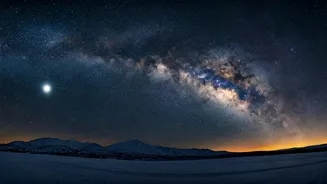
February 2026 ushers in the month with its captivating full moon, famously known as the 'Snow Moon.' This celestial event will be visible across the globe,
offering skywatchers a spectacular display. The name 'Snow Moon' traditionally signifies the heaviest snowfall of the year in many northern regions, though its appearance is purely a visual phenomenon of lunar illumination. Observers can anticipate this glistening spectacle gracing the eastern sky at sunset, providing a prime viewing opportunity for those eager to witness its ethereal glow. Its brilliance will be particularly striking, making it a highlight for amateur astronomers and casual observers alike. Plan to look up as it ascends, painting the twilight with its soft, radiant light.
Planetary Parade Begins
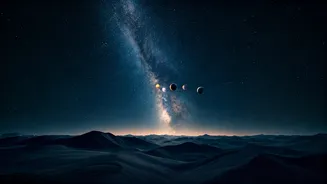
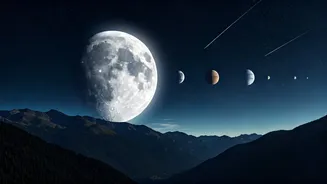
Get ready for a truly rare cosmic event in February 2026: a 'planetary alignment' that will transform the night sky into a breathtaking parade of celestial bodies. This extraordinary convergence will feature several of the brightest planets in our solar system, aligning in a spectacular fashion. Jupiter, a giant among planets, is set to dominate the winter sky after sundown, offering a brilliant beacon for observers. This alignment isn't just about Jupiter; Mercury, another swift-moving planet, will also be a notable participant. The collective visibility of these planets in close proximity is a significant astronomical event, providing a unique chance to observe their orbital dance. Don't miss this chance to witness the planets come together in a dazzling display of cosmic choreography.
Comet's Fleeting Visit
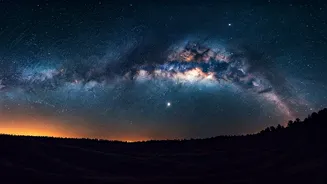
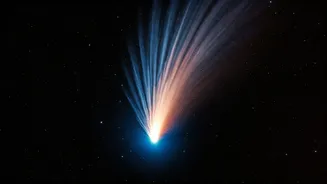
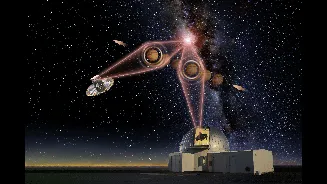
Adding another layer of excitement to the February 2026 skywatching calendar is the anticipated visit of a comet. This celestial wanderer will grace stargazers with its presence, offering a rare glimpse of its icy nucleus and trailing tail. The comet's journey will bring it into view from locations like Kitt Peak, a renowned observatory site, allowing for detailed observation and potentially stunning astrophotography. The appearance of comets is an infrequent event, making this a significant opportunity for both dedicated astronomers and curious onlookers. Its passage serves as a reminder of the dynamic and ever-changing nature of our solar system, offering a unique perspective on the vastness of space and the celestial bodies that traverse it.
Celestial Wonders Beyond
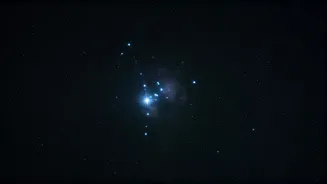
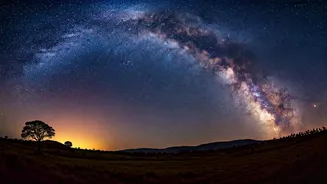
The wonders of the February 2026 night sky extend beyond the primary events, offering a wealth of other celestial sights. For those with telescopes, the 'Seven Sisters' of the Pleiades star cluster will be a magnificent sight, especially as they appear to swim in the light of a waxing moon near sunset. This iconic asterism, a collection of young, hot stars, is always a crowd-pleaser. Additionally, deep-space enthusiasts might find the Pelican Nebula shining brightly, a testament to the beauty that can be captured with advanced equipment. Even for those with less specialized gear, the general night sky will be rich with stars, and with the aid of star maps, identifying constellations and other notable celestial objects becomes an engaging activity. Observing tips and guides will be available to help maximize the viewing experience.