
A Royal Origin Story
The tale of Mysore Pak, often hailed as India's "King of Sweets," begins within the opulent kitchens of the Wadiyar rulers of Mysore, likely in the late
19th or early 20th century. Legend has it that a palace cook named Kakasura Madappa, caught off guard by a sudden demand for dessert, improvised with gram flour (besan), sugar, and an abundance of ghee. He cooked the mixture into a sugar syrup, creating soft, golden blocks that delighted the king with their unique, melt-in-your-mouth quality. Upon tasting this novel creation, the king inquired about its name, and Madappa, in a moment of inspiration, christened it "Mysore Paka," combining the name of the city with the Kannada word for sugar syrup. This accidental invention soon became a celebrated royal delicacy, with the king himself encouraging Madappa to share his creation beyond the palace walls, leading to the establishment of a shop that continues to offer what many consider the authentic recipe.
The Essence of Mysore Pak
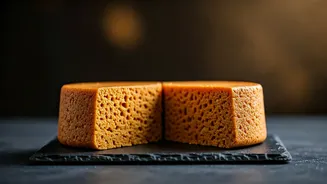
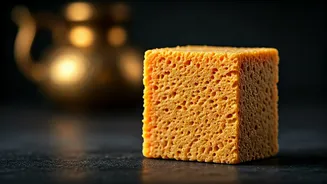
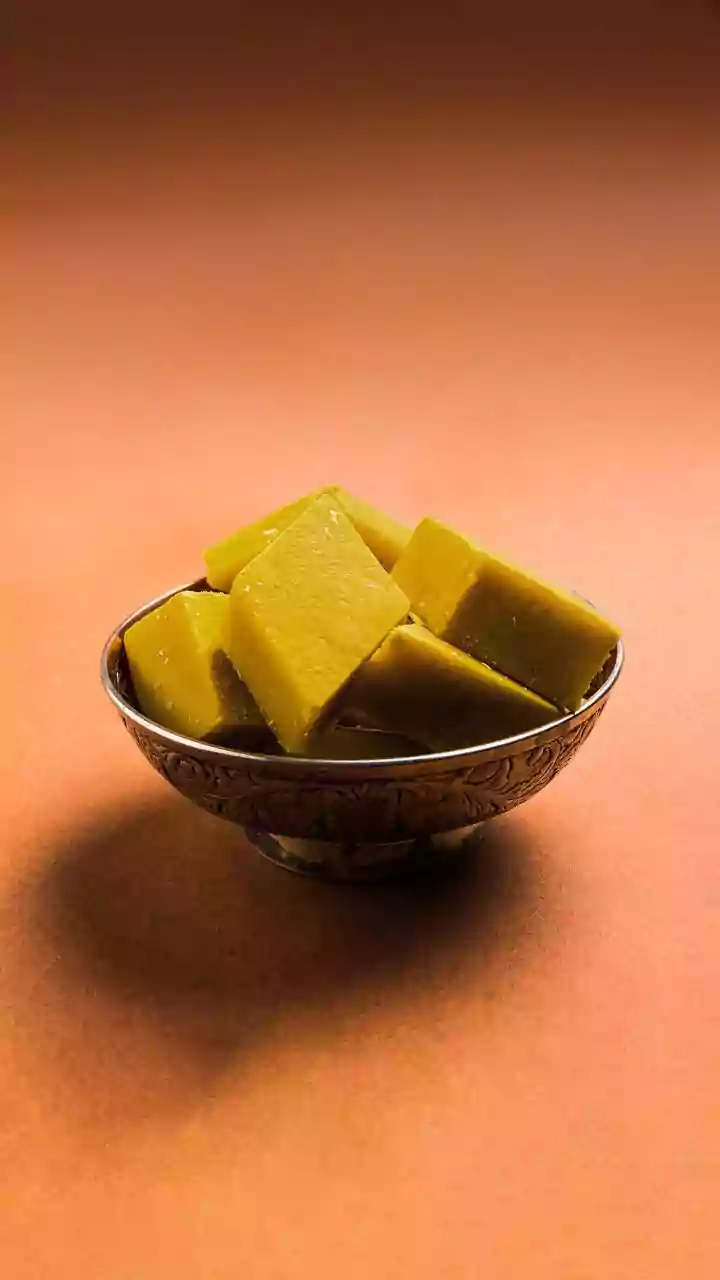
At its fundamental level, Mysore Pak is a testament to the magic that can be achieved with a few core ingredients prepared with skill. It is a South Indian confection primarily composed of gram flour, sugar, and a generous amount of ghee. When prepared with precision, these elements coalesce into a dense, porous confection that, while visually resembling a firm barfi, offers a texture akin to a buttery cookie. The characteristic "pak" in its name refers to the sugar syrup, which acts as the binder for the entire concoction. Traditional versions tend to be firmer and possess a slight crumble, whereas modern adaptations, popularized by certain sweet establishments in Karnataka, are remarkably softer and airier, often described as melting effortlessly on the tongue. Regardless of its texture, the distinct taste of pure ghee and slow, meticulous cooking remains the hallmark of this beloved sweet.
More Than Just a Sweet
In the cultural fabric of South India, Mysore Pak transcends its status as a mere festive treat; it is an integral part of significant life events. Its presence is almost obligatory at auspicious occasions such as weddings, baby showers, and major religious ceremonies, where a spread of sweets would feel incomplete without the presence of these rich, golden rectangles. It's often one of the first "special" sweets considered when there's joyous news to share or distinguished guests to impress. Beyond its role in celebrations, Mysore Pak has also become an edible symbol of heritage, particularly for Karnataka, where it is recognized as a signature dessert alongside other iconic dishes. Travel guides and food enthusiasts often highlight this sweet as a compelling reason to visit Mysuru, treating it almost as a tangible piece of culinary history that one can experience and savor.
Regional Twists and Tastes
The beloved Mysore Pak has evolved over time, giving rise to several distinct regional variations, each offering a unique sensory experience. The traditional style, often associated with the original palace recipe and establishments like Guru Sweets, is characterized by its firmer texture and a distinct, porous interior that provides a satisfying bite before yielding to a melt-in-your-mouth sensation. In contrast, the soft Mysore Pak, a more contemporary interpretation popularized by newer sweet chains, features a higher ratio of ghee and a shorter cooking time. This results in a lighter hue and an exceptionally tender consistency, often likened to a ghee-infused sponge cake. Furthermore, contemporary cooks and some brands have begun experimenting with flavored Mysore Pak, incorporating ingredients like cardamom, saffron, or even dried fruits, chocolate, and coffee into the basic formula, although purists maintain that the original blend of besan and ghee remains unparalleled.