



The Humble Potato's Journey
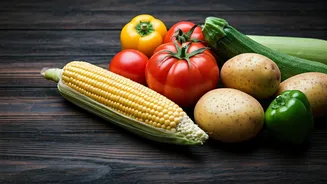
The ubiquitous potato, a staple in countless Indian dishes, actually hails from the high-altitude regions of the Peruvian-Bolivian Andes. It wasn't until
the latter half of the 16th century that this versatile tuber made its way to Europe, and subsequently, India. Portuguese traders played a pivotal role in this global exchange, introducing New World produce, including the potato, to Indian soil. What began as an exotic import has, over centuries, become so deeply embedded in Indian cuisine that it's difficult to imagine traditional meals without it. Its South American heritage is a testament to the enduring impact of historical trade routes on local culinary practices, transforming a foreign vegetable into an integral part of everyday Indian cooking.
Tomatoes: Gravy's Secret
Tomatoes, the vibrant heart of Indian gravies, chutneys, and beloved street food snacks, are surprisingly not indigenous to the subcontinent. Their story begins in South America, from where they were first brought to Europe in the early 16th century. The spread into India followed a similar path as other New World crops, primarily facilitated by Portuguese trade. This introduction marked a significant evolution in Indian cooking, as tomatoes offered a new dimension of acidity and texture, becoming a foundational element in a vast array of dishes. Their integration demonstrates how a single ingredient can profoundly influence the fundamental character of a region's gastronomy.
Chilli Peppers: The New Heat
The fiery kick that defines so much of Indian food owes its presence to the chilli pepper, a recent transplant from the Americas. Before the 16th century, Indian kitchens relied on spices like black pepper, long pepper, ginger, and mustard to impart heat. The arrival of chillies via Portuguese trade routes during the Columbian Exchange gradually changed this landscape. Initially coexisting with older spices, chillies eventually gained prominence due to their adaptability, ease of cultivation, and affordability. They flourished in diverse Indian climates, quickly becoming a favorite among farmers and cooks alike. Their remarkable ability to meld into curries, pickles, and tempering transformed regional cuisines, making them an inseparable part of India's modern culinary identity.
Cashews: A Nutty Arrival
The creamy, rich flavor of cashews, now a cornerstone of Indian festive sweets and savory dishes, originates from northeastern Brazil. This prized nut tree was introduced to India by Portuguese traders and missionaries in the late 16th century. Initially, they were planted along coastal areas primarily to combat soil erosion, a practical agricultural application. However, the cashew tree proved remarkably resilient and productive in Indian conditions. Over time, it seamlessly integrated into local food traditions, evolving from a land-management tool to a culinary essential. Today, cashews are a vital component in everything from decadent desserts to complex, slow-cooked gravies and casual snacking.
Pineapple's Tropical Sweetness
The succulent sweetness of the pineapple, a tropical fruit now commonly found across India, is another legacy of post-15th-century introductions. Native to South America, this fruit embarked on its global journey through the extensive Portuguese trade networks of the 16th century, reaching India around the mid-1500s. Its affinity for warm, humid climates made it particularly successful in India's coastal and northeastern regions. The pineapple gradually found its place in local diets, appearing on street-side fruit carts, in celebratory desserts, and even incorporated into regional savory dishes. Its easy adaptation and widespread appeal solidified its status as a beloved fruit within India.
Papaya: From Mexico to India
The papaya, a fruit that appears entirely natural in Indian markets, traces its lineage back to Mexico and Central America. This distinctive plant was also among the New World produce brought to India by Portuguese traders during the 16th century. Much like other foreign crops that have become Indian staples, the papaya's success lay in its ability to thrive in local conditions and its assimilation into the existing culinary fabric. Indian kitchens embraced this exotic offering, transforming it into an integral part of the gastronomic landscape. Its journey exemplifies how global trade can introduce new flavors and textures that are then adopted and made uniquely their own by a new culture.