
Origins and History
The history of Indian classical dance is incredibly rich, rooted in ancient scriptures, temple rituals, and royal patronage. These dance forms, often called
'Shastriya Nritya,' trace their lineage to the Natya Shastra, a comprehensive text on performing arts. Over centuries, they evolved, influenced by regional cultures and aesthetic sensibilities. Many forms originated in temples, serving as a devotional offering to deities. Royal courts also played a significant role, fostering the refinement and preservation of these art forms. This history is evident in the intricate movements, symbolic gestures, and the narratives portrayed through dance. Each form's evolution reflects the unique cultural context and the artistic innovations of its practitioners through time. The preservation and continuation of these forms are testament to the enduring power of India's cultural heritage. These dances often served as a form of storytelling, conveying religious tales, historical events, and social customs through graceful movements, facial expressions, and elaborate costumes. Today, the legacy of these dances lives on in performances, schools, and cultural festivals.
Exploring Unique Styles
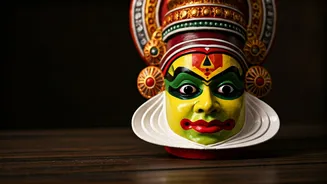
Beyond the more recognized forms like Bharatanatyam and Kathak, India boasts numerous other classical dance styles. Each style originates from a specific region and embodies its distinct character. The Sattriya dance from Assam is a living tradition, a fusion of devotion, storytelling, and artistic expression, accompanied by unique music and costumes. Another captivating form, Chhau, originating from the eastern part of India, incorporates elements of martial arts, telling stories of mythology and folklore with masked performers. Mohiniyattam, a graceful dance from Kerala, uses delicate movements and subtle expressions to portray themes of love and devotion. These dances, along with many others, offer a deeper appreciation of the diversity within Indian classical dance. Each style maintains a unique vocabulary of movements, music, and thematic focus. These lesser-known forms are as important and deserve the recognition and appreciation of the global audience. Exploring these forms provides a rich understanding of India's artistic heritage and cultural variations. Each dance embodies a narrative, a historical account, a belief and the practices of that era.
Cultural Significance
Indian classical dance forms are deeply intertwined with cultural and spiritual values. They are not merely performances, but also a way of life, reflecting the history, religion, and social customs of the regions they come from. Each dance tells a story through complex hand gestures (mudras), facial expressions (abhinaya), and rhythmic footwork. The dances often portray episodes from mythology, epics, and religious texts, conveying moral messages and spiritual insights. They serve as a vital link to the past, transmitting knowledge, values, and beliefs across generations. They are integral to festivals, ceremonies, and celebrations, enhancing community spirit and cultural identity. The music, costumes, and makeup also play essential roles, amplifying the narrative and adding to the sensory experience. These forms provide a rich tapestry of history, art, and philosophy, reflecting the diverse perspectives, beliefs, and artistic aspirations of Indian society. The dance forms have transcended regional boundaries, offering a global audience a glimpse into India's rich heritage.
Learning and Preservation
Preserving and promoting these dance forms involves supporting artists, educators, and organizations that contribute to its continuation. Many institutions and schools are devoted to teaching and preserving these traditions, passing them on to the next generation. These efforts include providing rigorous training, promoting performances, and documenting the history and techniques of each dance form. Efforts to popularize these forms include workshops, festivals, and cultural exchanges, connecting artists with audiences and promoting cross-cultural understanding. Digital platforms have also become important, with online classes, tutorials, and performances allowing the art form to reach a wider audience. The documentation efforts such as the recording of the history, the music, the techniques, and the performance styles are essential. Sustained financial support and the empowerment of artists and their communities are crucial for the long-term vitality of these art forms. These efforts ensure the legacy of Indian classical dance will endure for generations.