





The Starkness of White
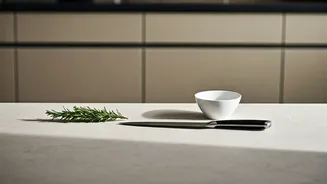
Pure white countertops, while aesthetically pleasing when pristine, present a significant maintenance challenge for everyday cooking. Private chef Christopher
Hensel points out that any minor spill, coffee ring, or even a stray crumb becomes glaringly obvious on a completely unpatterned white surface. This necessitates constant vigilance and frequent wiping to maintain the desired sleek appearance. For those who prefer a more forgiving aesthetic, materials like marble, with their inherent veining, are far better at camouflaging everyday kitchen activity and are recommended as a practical alternative for busy home cooks.
Excessive Deep Drawers
Recipe developer Marissa Stevens observes a growing inclination towards installing numerous deep drawers in lower kitchen cabinets, often as a replacement for standard cabinetry. While seemingly convenient, this trend proves impractical for storing taller items like bottles or canisters, which tend to topple over easily. Loading and unloading these deep compartments can also be cumbersome. Stevens advocates for a balanced approach, suggesting that a few well-placed deep drawers for pots and pans are sufficient, and that traditional cabinets with pull-out shelves often offer superior functionality for a wider range of kitchen essentials.
Skinny Island Sinks
Kitchen islands featuring a built-in sink, particularly when the island is narrow, can be a significant functional impediment, as experienced by private chef Christopher Hensel. In kitchens with limited space, these slender islands sometimes house the only sink. This setup makes it incredibly difficult to prep food or wash dishes without water inevitably splashing onto surrounding surfaces and ingredients. The design often leads to water cascading down the sides of the island, creating a mess and hindering efficient workflow, making it a trend best avoided in smaller culinary spaces.
Overly Ambitious Islands
Marissa Stevens expresses a desire to see the trend of excessively large kitchen islands diminish. While a spacious island can be a chef's dream for food preparation, its utility is severely compromised if it encroaches on essential walkability or, more critically, lacks sufficient power outlets. The inconvenience of having to snake extension cords across the kitchen floor to plug in appliances defeats the purpose of an expansive prep area. Ideally, an island's footprint should not exceed ten percent of the total kitchen square footage to ensure a harmonious balance of space and functionality.
The Open Shelving Dilemma
Both Marissa Stevens and Christopher Hensel would steer clear of installing open shelving in place of upper cabinets, even for a hypothetical adversary's kitchen. Maintaining a stylishly curated look on open shelves is a constant effort, and the practical challenge of keeping them clean is equally demanding. Cabinets offer crucial protection for cookware and pantry staples against airborne grease, steam, and dust, especially in kitchens with less-than-ideal ventilation systems. Stevens emphasizes that enclosed storage is a far more practical and protective choice for the longevity of kitchen tools and ingredients.