




The Mars Pivot
In a surprising turn of events, Elon Musk declared the Moon a "distraction," advocating for a direct journey to Mars during a period of significant political
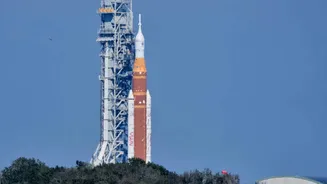
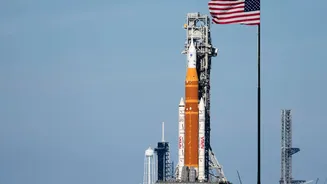
influence. This sentiment quickly translated into policy, with the then-administration proposing a substantial shift in NASA's priorities. The initial budget for NASA even proposed canceling key elements of the Artemis program, like the Gateway lunar space station and the Space Launch System, redirecting nearly $1 billion towards a rapid human-to-Mars initiative. This included plans for immediate launches of large landing systems and future funding for commercial Moon-to-Mars transportation, seemingly designed to benefit SpaceX's Starship. This bold proposal signaled a significant, albeit temporary, ascendancy of Mars in the national space agenda, impacting industry and agency planning alike.
Artemis Reclaims Orbit
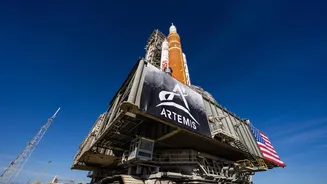
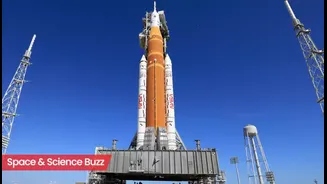
The ambitious Mars-focused plan quickly faltered. Within a week of its proposal, Congress intervened, adding a $10 billion amendment that firmly rejected the cancellation of the Orion, SLS, and Gateway components of Artemis. Subsequent NASA appropriations for 2026 mentioned Mars primarily for modest scientific missions and explicitly forbade redirecting Artemis funds to commercial Moon-to-Mars transport. The momentum for Mars seemed to wane as the president's focus shifted within months, and Musk departed the administration by June. Geopolitical concerns began to overshadow the Mars objective by mid-summer, and by autumn, the Artemis III landing contract was reopened to other bidders due to concerns about Starship's readiness. This series of events marked a decisive return to lunar exploration as the primary human spaceflight goal.
Lunar Base Secured
The definitive shift back to lunar exploration occurred in December when the White House officially declared the U.S. commitment to landing astronauts on the Moon via Artemis and establishing initial elements of a permanent lunar base by 2030. Mars was consequently demoted in both detail and priority, with NASA now tasked with merely "preparing for the journey to Mars," a directive echoing earlier space exploration policies. This decision cemented the Artemis program's position as the forefront of human spaceflight efforts, prioritizing the Moon as the immediate stepping stone for future deep-space endeavors.
Artemis's Resilience
The year 2025 served as a crucial test for the Artemis coalition, which ultimately emerged stronger. While the program's structure might appear complex or less efficient from a purely engineering standpoint, its design was intentionally optimized for political survival. Unlike previous lunar return initiatives that were canceled by subsequent administrations, Artemis has now successfully navigated two presidential transitions and is on the verge of sending humans beyond Earth orbit for the first time in over fifty years. This remarkable achievement is attributed to a durable coalition encompassing the Space Shuttle workforce (now supporting SLS), new aerospace companies, international partnerships, and the influence of geopolitical competition. This coalition, once established, has proven to be remarkably stable, a testament to strategic planning and foresight, such as the 'Pace Doctrine' which emphasized long-term stability over short-term goals.
Mars Exploration Continues
Despite the re-prioritization towards the Moon, the pursuit of Mars remains scientifically vital. The rationale for returning to Mars and bringing back samples is robust, with the potential discovery of biosignatures by the Perseverance rover providing significant motivation. Regardless of individual company efforts or specific destination choices for human spaceflight, humanity's innate curiosity about Mars and the scientific mysteries it holds should continue to drive exploration. Furthermore, while Elon Musk's personal endeavors toward Mars are independent of governmental coalition politics, relying on such individual efforts for national goals carries inherent risks. National objectives in space require broad, democratically accountable support, not singular, potentially transient, individual commitments.