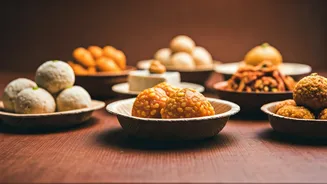

Til Ladoo: Sweet Bliss
Til ladoo is a quintessential sweet prepared during Makar Sankranti. It is made from sesame seeds (til) and jaggery (gud), offering a delightful combination
of taste and nutritional benefits. The sesame seeds are roasted to bring out their nutty flavour, then mixed with melted jaggery to form small, round balls. This sweet treat is not only delicious but also signifies good luck and prosperity for the upcoming year. Preparing til ladoos at home is a common practice, representing the sharing of joy and the sweetness of the harvest season. The combination of til and gud also provides warmth to the body during the cold winter days, making it a perfect treat for the occasion. Many households incorporate variations, adding peanuts, dry fruits, or cardamom to enhance the flavour.
Gur ki Gajak: Crunchy Delight
Gur ki Gajak, a brittle sweet made from sesame seeds and jaggery, is a crunchy and flavourful treat, particularly popular in North India during Makar Sankranti. The process involves heating jaggery until it melts and then mixing it with roasted sesame seeds. This mixture is then spread thinly and allowed to cool and harden. Gajak offers a delightful blend of textures, the crispiness of the gajak contrasting with the chewy texture of the sesame seeds. This confection not only satisfies the sweet tooth but also provides warmth during the cold winter season. Gur ki gajak is readily available in local markets, but many people prefer making it at home, using traditional recipes that have been passed down through generations. This homemade touch adds a sense of love and festive spirit to the celebrations.
Peanut Chikki: Energy Boost
Peanut chikki, a simple yet nutritious sweet, is a staple during Makar Sankranti celebrations. It is made from peanuts and jaggery, providing a quick energy boost. Peanuts are roasted and combined with melted jaggery, which is then shaped into flat bars or squares. Chikki is a perfect snack because it combines a crunchy texture with a sweet flavour. Peanut chikki is a convenient and readily available treat, ideal for sharing with family and friends. Its portability makes it an excellent choice for outdoor activities. Peanut chikki is also believed to have health benefits because peanuts are rich in protein and jaggery offers iron, making it a nutritious choice amidst the festive treats. Each bite is a reminder of the season's bounty and the joy of sharing.
Undhiyu: Gujarati Specialty
Undhiyu, a mixed vegetable dish cooked upside down in earthen pots, is a signature dish of Gujarat, particularly enjoyed during Makar Sankranti. The vegetables, including eggplant, potatoes, beans, and more, are marinated in a blend of spices and cooked slowly underground in an earthen pot. The slow cooking process allows the flavours to meld, creating a unique and savoury taste. Undhiyu is often served with hot puris and shrikhand. This method of cooking symbolizes the warmth and abundance of the harvest season. The earthen pot adds an earthy flavour to the dish. Undhiyu is a festive delight, representing community spirit and shared joy. This dish is usually made in homes and enjoyed during community gatherings.
Puran Poli: Sweet Flatbread
Puran Poli, a sweet flatbread, is commonly enjoyed during Makar Sankranti, especially in Maharashtra. The filling, puran, is made from cooked chana dal (split chickpeas) and jaggery, flavored with cardamom and nutmeg. This filling is then stuffed into a dough made from maida (refined flour) or wheat flour. The flatbread is then cooked on a griddle with ghee. Puran Poli is often served with ghee and a side of kadhi. This combination of flavours is a comforting meal, perfect for the cool winter days. The preparation of puran poli is a communal activity, with families and friends coming together to create this festive food. The sweet, rich taste represents the sweetness of the harvest and the joy of the celebrations.
Pongal: South Indian Staple
Pongal, a sweet rice dish, holds a significant place in South Indian cuisine, particularly during Makar Sankranti. This dish is made from rice and lentils, cooked with milk and jaggery. The preparation of Pongal is a symbol of prosperity. The act of boiling the rice over in an earthen pot symbolizes abundance and prosperity. The dish is usually cooked in the open, and the moment the mixture boils over, the cooks shout 'Pongalo Pongal!' to welcome the harvest season. This dish is offered to the sun god as a mark of gratitude. The flavours can vary, with additions of cardamom, cashews, and raisins. Pongal is more than just a dish; it's a celebration of gratitude, abundance, and the joy of community.
Khichdi: Comfort Food
Khichdi, a simple yet wholesome dish, consisting of rice and lentils, is a versatile and comforting meal often enjoyed during Makar Sankranti. This dish is considered auspicious and is usually offered to the gods on this day. The dish is easy to digest and perfect for the cold weather. Khichdi can be prepared in various ways, with different vegetables and spices added to enhance the flavour. Khichdi represents simplicity, balance, and the harmony of ingredients. It symbolizes the coming together of different elements, much like the harvest season that brings diverse crops. Many families make khichdi as part of their Makar Sankranti traditions, enjoying this nourishing dish with ghee and pickles.
Dahi Chura: Traditional Snack
Dahi Chura is a traditional snack made with flattened rice (chura) and curd (dahi), commonly eaten during Makar Sankranti. The flattened rice is soaked in curd and served with a sprinkle of sugar and a variety of nuts and fruits. This snack offers a contrast of textures and flavors – the softness of the chura, the creaminess of the curd, and the sweetness of the sugar. It's a quick and easy dish, making it a popular choice for breakfast or a mid-day snack during the festivities. Dahi chura is also known for its cooling properties, making it a refreshing treat during the harvest season. It symbolizes the start of a new season with freshness and delight.
Gujia: Sweet Dumplings
Gujia, a sweet dumpling filled with a mixture of dried fruits and khoya (milk solids), is a delightful treat often enjoyed during various festivals, including Makar Sankranti. The filling is delicately spiced, often with cardamom and nutmeg, and then encased in a crispy, flaky dough, and deep-fried until golden brown. The outer shell is crispy while the filling offers a sweet and melt-in-your-mouth experience. Gujias are considered a symbol of joy and celebration, typically made at home and shared with family and friends. This sweet treat represents the richness of the harvest and the warmth of the community spirit during the festival.
Kheer: Rice Pudding
Kheer, a creamy rice pudding, is a popular dessert across India, and is often prepared during Makar Sankranti to mark the festive season. The pudding is made with rice cooked in milk, sweetened with sugar or jaggery, and flavored with cardamom, saffron, and nuts. This dessert symbolizes prosperity and abundance. The slow cooking process enhances the flavors and texture, resulting in a rich and comforting treat. Kheer is often served warm or chilled. It is a dessert that brings people together, promoting a sense of community and the sweetness of shared traditions. The rich and aromatic flavours of kheer make it a perfect finale to any festive meal.