






Gathering Your Ingredients
To begin your culinary journey, you will need to gather the essential ingredients. Fresh arbi leaves (colocasia leaves) are the star, so ensure they are young
and tender for the best texture. You'll also need a mix of spices common in Indian cooking: turmeric powder for color and its anti-inflammatory properties, red chili powder for a touch of heat, coriander powder to add flavor, and salt to season to your preference. Other ingredients include a tempering of mustard seeds, cumin seeds, asafoetida (hing), and oil. A few cloves of garlic and green chilies add depth. Finally, you might also consider adding some gram flour (besan) to thicken the gravy. Having everything prepped makes the cooking process smooth.
Leaf Preparation Is Key
Before cooking, the arbi leaves need some careful preparation. Thoroughly wash the leaves to get rid of any dirt or impurities. It's advisable to gently rub the leaves to make them softer. The next step is to chop the leaves. You can either finely chop them or cut them into bite-sized pieces. If using young, tender leaves, you can skip this step. Older leaves may need to be lightly steamed or boiled to soften them. The leaves can be slightly bitter, so proper preparation is crucial for a pleasant result. This method of preparation enhances the leaves' taste, thus making your sabzi delicious.
Tempering the Spices
This part is crucial for infusing the sabzi with its distinct aroma and flavour. Heat oil in a pan over medium heat. Add mustard seeds and let them splutter. Then, add cumin seeds, and as they start to sizzle, add a pinch of asafoetida (hing). Next, add finely chopped garlic and green chilies. Sauté them until they turn slightly golden and release a fragrant aroma. Adding the spices and aromatics in this manner is essential; the oil's heat releases their flavors, which will meld into the leaves and enhance the whole dish. This is the base upon which the rest of the flavours are built.
Adding the Leaves
Once your tempering is ready, it's time to add the prepared arbi leaves. Add the chopped or sliced leaves into the pan with the tempering. Stir-fry them for a few minutes until they slightly wilt and blend well with the spices. At this stage, add the turmeric powder, red chili powder, coriander powder, and salt. Stir the mixture well, ensuring that the spices coat the leaves evenly. You can now add a small amount of water to prevent the leaves from sticking to the pan and to help them cook through. Reduce the heat to low and allow the leaves to simmer. The leaves will soften and absorb the flavors of the spices. Mix the leaves regularly.
Simmering & Final Touches
Allow the sabzi to simmer over low heat. If you've added water, cover the pan and let it cook for about 15-20 minutes, or until the leaves are tender. You can test for doneness by tasting a small piece of leaf. If using gram flour (besan), mix it with a small amount of water to make a smooth paste. Add this to the sabzi during the last few minutes of cooking to thicken the gravy. Stir constantly to avoid lumps. When the sabzi is ready, the leaves should be soft and the flavors will be well-combined. Garnish with fresh coriander leaves before serving for a fresher taste.
Serving Suggestions
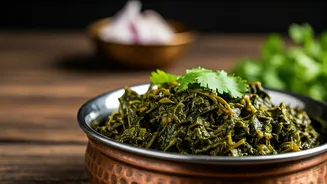
Arbi Ke Patte Ki Sabzi is best enjoyed hot, making it a comforting meal. Serve it with roti or paratha, which are perfect for scooping up the flavorful gravy. You can also pair it with rice. A simple side of yogurt or raita complements the sabzi, cooling the heat from the spices and providing a refreshing contrast. Some people enjoy a squeeze of lemon juice before serving. You can also customize the dish based on your taste preferences. Feel free to add ingredients, like coconut milk or other spices. Consider adding a dollop of ghee on top for that extra richness and flavour.