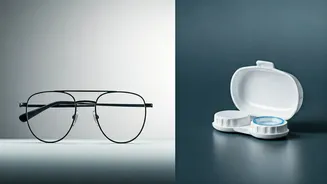








Glasses: The Dependable Choice
For many, eyeglasses stand out as the most straightforward and consistently reliable method for correcting vision. Their primary advantage lies in their
non-intrusive nature; they do not make direct contact with the eye's surface, which significantly lowers the potential for irritation or infection. Dr. Digvijay Singh, an Eye Specialist at Noble Eye Care, emphasizes that glasses are generally the safest approach due to this lack of direct eye contact and their ease of use. Beyond vision correction, glasses offer a practical protective barrier, shielding your eyes from common environmental nuisances such as dust and pollution. Individuals who spend considerable time in front of digital screens can further benefit from specialized lens coatings designed to mitigate the effects of screen usage, adding another layer of comfort and protection to their daily routine.
Contacts: Unrestricted Clarity
Contact lenses present a distinct alternative, offering a sensation of unhindered vision. They eliminate the physical presence of frames and provide an unobstructed, expansive field of view, often perceived as more natural. Dr. Hardik Parikh, Medical Director at Global Eye Clinic, notes that contact lenses are frequently favored by those leading active lives or participating in sports, as they enhance peripheral vision. Unlike glasses, they are unaffected by humidity, do not fog up, and remain securely in place during physical activity. This inherent convenience is a major draw for many users, simplifying their visual experience across various situations and movements.
Contact Lens Care Demands
While contact lenses offer substantial convenience, their use necessitates a rigorous commitment to care and hygiene. Proper handling, cleaning, storage, and timely replacement are crucial to prevent complications. Dr. Singh cautions that improper care can unfortunately lead to issues like eye dryness, irritation, and potentially serious infections. Consequently, contact lenses may not be the most suitable option for individuals who naturally experience dry eyes or possess heightened eye sensitivity. Even minor deviations from recommended care routines can result in considerable discomfort, underscoring the importance of meticulous attention to detail when using contact lenses.
Doctor's Balanced Advice
Medical professionals generally refrain from advocating a single, universally superior solution. Instead, they recommend a balanced approach, integrating both glasses and contact lenses based on an individual's specific lifestyle and needs. Dr. Parikh suggests that many patients find a hybrid strategy beneficial, employing glasses as their primary vision correction tool while reserving contact lenses for specific occasions or activities. This adaptable method allows for flexibility when required, while simultaneously minimizing the cumulative strain on the eyes over the long term, ensuring both optimal vision and eye health.