





Powering Up Space
Star Catcher Industries has successfully secured a substantial $65 million in Series A funding, signaling a major leap forward in their mission to establish
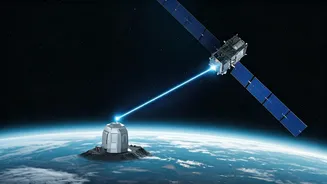
a robust power grid in orbit. This significant investment, spearheaded by B Capital with contributions from Shield Capital and Cerberus Ventures, brings the company's total raised capital to an impressive $88 million. The core of Star Catcher's innovation lies in its development of power-beaming technology, designed to efficiently transfer energy to satellites by precisely focusing sunlight onto their solar panels. Following successful terrestrial tests conducted in varied environments, including a football stadium and the historic space shuttle runway at Kennedy Space Center, the company is now poised to validate this technology in the challenging arena of space. This funding injection is crucial for conducting a series of in-orbit demonstrations that will prove the viability and reliability of their unique technology stack for space-to-space power transmission, marking a pivotal step towards operationalizing their vision.
Orbital Demonstrations Ahead
With this new capital, Star Catcher is meticulously planning its inaugural in-space demonstration mission, slated for later this year. This critical mission, alongside a subsequent demonstration, is intended to firmly establish the company's readiness for full-scale operations and aggressive expansion. The company has already made strides by testing essential supporting technologies, such as advanced acquisition and tracking software, aboard a Loft Orbital satellite in late 2025. These upcoming orbital tests are not just proofs of concept; they are strategic stepping stones designed to build confidence and pave the way for future scaling. Star Catcher, currently operating with approximately 40 employees in Jacksonville, Florida, anticipates considerable growth across all departments, actively recruiting talent to meet the demands of their ambitious roadmap. The company is concurrently engaging with both commercial entities and government agencies to cultivate future clients for its innovative power-beaming satellites.
New Markets Emerging
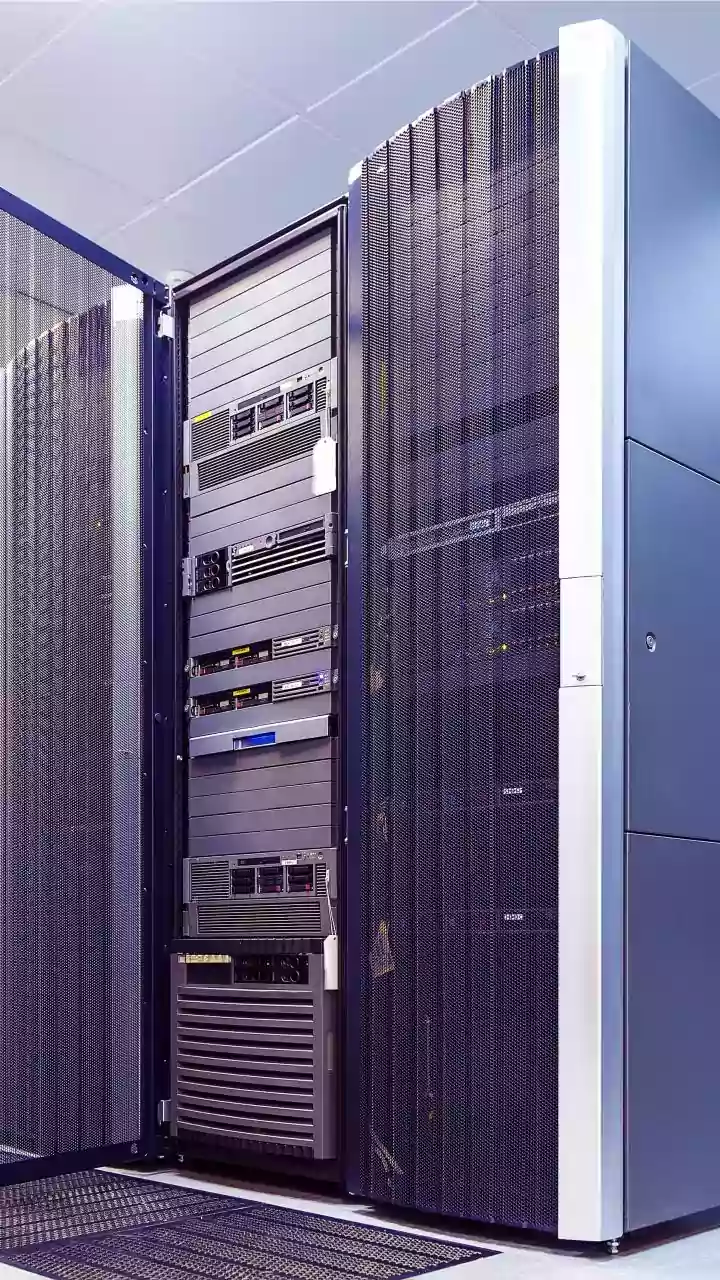
The potential applications for Star Catcher's power-beaming technology are vast, with orbital data centers identified as a key early adopter segment due to their substantial power requirements. The company's leadership emphasizes that customers with power-intensive operations and payloads will be the initial beneficiaries. This includes not only orbital data centers but also satellites facilitating direct-to-device communications and those equipped with synthetic aperture radar imaging capabilities. Beyond these early adopters, Star Catcher has already secured $60 million in signed contracts for in-space power delivery and boasts a prospective customer pipeline valued at $3 billion. The overarching vision is that eventually, all spacecraft will benefit from this service, whether for extending operational lifespans, enabling recovery from anomalies, providing enhanced resilience for national security assets, or facilitating maneuverability. The strategic addition of influential figures like retired Space Force Gen. Jay Raymond to the board underscores the significance of this venture for both commercial and national security interests.
Transforming Space Design
The advent of an accessible in-orbit power grid, as envisioned by Star Catcher, promises to fundamentally alter satellite design principles and address a critical constraint in space missions: SWaP (size, weight, and power). By alleviating the limitations imposed by onboard power generation and storage, satellite developers will gain unprecedented flexibility to innovate and optimize their designs. This paradigm shift is analogous to how reusable launch vehicles revolutionized the 'size' and 'weight' aspects of space mission planning. Star Catcher's technology will unlock new possibilities on the 'power' front, enabling more sophisticated payloads, extended mission durations, and enhanced operational capabilities. Board members like Jeff Johnson of B Capital highlight the immense opportunity, noting the exploding demand for space infrastructure and Star Catcher's potential to build the inaugural in-orbit power grid. This innovation is poised to redefine what's achievable in space, fostering a new era of exploration and utility.