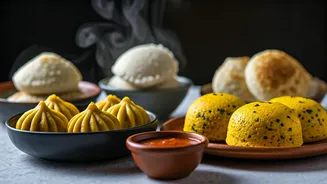

Idli: South Indian Staple
Idli, a steamed savory cake, reigns as a South Indian breakfast classic. Crafted from fermented rice and lentil batter, this dish is naturally light and easily
digestible. The fermentation process gives it a slightly tangy taste and helps in breaking down nutrients, making them easier for the body to absorb. To prepare idli, the batter is poured into idli molds and steamed until fluffy. It’s typically served with sambar (a lentil and vegetable stew) and coconut chutney, creating a complete and balanced breakfast. The steaming process preserves the nutrients without the use of oil, making it a healthy option. Furthermore, Idli is gluten-free and vegan-friendly, accommodating various dietary needs. This delightful combination of taste, health, and simplicity makes Idli a beloved breakfast across India.
Dhokla: Gujarati Delight
Dhokla, a steamed savory cake originating from Gujarat, offers a unique blend of flavors and textures. This dish is made from fermented batter, often a blend of rice and chickpeas, which is then steamed to a light, airy consistency. The batter is seasoned with spices like mustard seeds, green chilies, and ginger, which add a distinct taste. Dhokla can be prepared in various ways, with different types available such as Khaman Dhokla (made primarily with gram flour) and Rava Dhokla (made with semolina). It’s typically garnished with fresh coriander leaves and served with chutney, providing a delightful mix of sweet, spicy, and savory notes. Its quick preparation time and nutritional content make it a favorite for both everyday meals and festive occasions. This is one of the most beloved and popular breakfast choices.
Puttu: Kerala’s Breakfast
Puttu, a steamed cylindrical cake from Kerala, is a unique breakfast item made from rice flour and coconut. The rice flour is layered with grated coconut in a puttu maker, a special steamer that gives it its distinct shape. As it steams, the coconut infuses the rice flour with a subtle sweetness and aromatic flavor. Puttu is traditionally served with kadala curry (black chickpea curry) or a sweet side like a banana, creating a satisfying and filling meal. The simplicity of its ingredients and the method of cooking make Puttu a light and easily digestible breakfast. This dish is a staple in Kerala homes and is often eaten along with a glass of milk or tea. It is a hearty breakfast dish that provides energy to get through the day.
Modak: Maharashtrian Sweet
Modak is a sweet dumpling enjoyed mainly in Maharashtra, particularly during the festival of Ganesh Chaturthi. Traditionally, modaks are steamed and are usually made with a rice flour dough that encases a filling of grated coconut and jaggery. The dough is shaped into a variety of forms and then steamed, which gives it a soft texture and delicate flavor. Modaks can also be fried, but the steamed versions are considered healthier. The sweet, coconut-infused filling is the heart of the dish, providing a rich, satisfying taste. It's often served as an offering to Lord Ganesha, symbolizing prosperity and good fortune. This beloved treat is not only delicious but also holds cultural significance, representing joy and celebration.
Khaman: Savory Gujarati
Khaman is a savory steamed snack from Gujarat, offering a fluffy and flavorful experience. Unlike the other variations of Dhokla, Khaman is usually made from a batter of gram flour (besan), which is then fermented and steamed. This process gives it a light, airy texture and a slightly tangy taste. The batter is seasoned with spices and often includes a tempering of mustard seeds, chilies, and curry leaves to add an additional layer of flavor. Khaman is known for its vibrant yellow color and is usually served with chutney or sev. It's a quick and easy breakfast option, popular for its delicious taste and convenience. Its preparation involves steaming the batter until it puffs up and becomes soft, creating a delightful treat.
Idiyappam: String Hoppers
Idiyappam, also known as string hoppers, is a delicate breakfast dish common in South India, especially in Kerala and Tamil Nadu. These are made from rice flour pressed into noodle-like strands, which are then steamed to create a soft, fluffy texture. The strands are typically served with a variety of accompaniments, such as vegetable stews, coconut milk, or egg curry. The process of making idiyappam requires specialized equipment to shape the rice flour dough into fine strands. Their mild flavor makes them a great base for many sides. The preparation is simple and it cooks quickly, making it a perfect breakfast for busy mornings. It's a light, yet satisfying meal, often enjoyed with sweetened coconut milk or spicy curries, offering a contrast of flavors.
Bati Chokha: Regional Fare
Bati Chokha, a hearty and wholesome breakfast originating from the regions of Bihar and Uttar Pradesh, is a complete meal. The Bati is a baked or steamed round bread made from wheat flour, typically stuffed with sattu (roasted gram flour) and spices. The Chokha is a mashed preparation of roasted vegetables, usually brinjal (eggplant), tomatoes, and potatoes. This dish is not only delicious but also provides a balance of carbohydrates, proteins, and essential nutrients. When steamed, the Bati becomes soft and easy to consume and is often dipped in ghee for added flavor. The combination of the smoky flavor of the Chokha and the savory Bati creates a satisfying and flavorful breakfast. It represents a rural cuisine that is rich in taste and tradition.
Rava Upma: Semolina Delight
Rava Upma, a popular South Indian breakfast, is made from semolina (rava) and various vegetables. It is a quick and easy dish to prepare, known for its soft texture and savory flavor. The semolina is roasted, then cooked with vegetables like onions, carrots, and peas, along with spices such as mustard seeds, curry leaves, and green chilies. The dish is cooked with water, which allows the semolina to absorb the flavors, creating a thick, porridge-like consistency. It's often served hot with a squeeze of lemon juice for an added zest. Rava Upma is a nutritious breakfast, rich in carbohydrates and essential nutrients from the vegetables. Its simplicity and speed of preparation make it a perfect option for busy mornings, proving to be a convenient and wholesome meal.
Momo: Himalayan Staple
Momo, a steamed dumpling, has become a popular breakfast choice, especially in the Himalayan regions. Traditionally made with a filling of minced meat and vegetables, these dumplings can be adapted to vegetarian options. The dough, usually made from all-purpose flour, is filled with a flavorful mixture and then steamed until cooked through. Momos can be served with a variety of sauces, often a spicy chili sauce or a milder tomato chutney. The steaming process gives them a soft, delicate texture, making them easy to eat. Momos are versatile, delicious, and a great way to start the day. They have made their way into many Indian kitchens and are appreciated for their savory and satisfying taste.
Pesarattu: Andhra Pancake
Pesarattu, a savory pancake from Andhra Pradesh, is a nutritious and flavorful breakfast made from green gram (moong dal). This pancake is not only gluten-free but also a rich source of protein and fiber. The green gram is soaked and ground into a batter, which is then spread thinly on a hot griddle and cooked. Traditionally, it is served with upma as a filling. The use of green gram gives it a slightly nutty taste. The preparation of pesarattu is simple, making it a quick and healthy option for breakfast. It can be made with various fillings such as onions, chilies, and other vegetables. This Andhra specialty is a great way to enjoy a hearty and health-conscious start to the day.