


Seek the Hallmark
Before anything else, scrutinize your silver for discreet markings. Genuine silver pieces invariably bear a hallmark, a small stamp indicating their metal
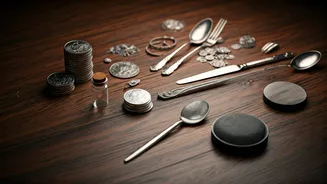
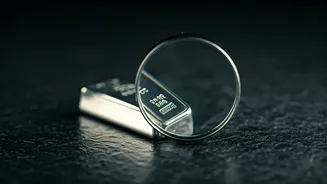
content. These can be found on the inner band of rings, the clasp of necklaces, or the underside of larger items. Look for '999' or '.999', signifying Fine Silver (99.9% pure), commonly seen in investment-grade coins and bars. '925' denotes Sterling Silver, an alloy composed of 92.5% silver. Older European pieces might display '900' or '800'. Be wary of 'EPNS', which stands for Electroplated Nickel Silver – a clear sign of a base metal coated in a thin layer of silver.
The Magnet's Verdict
Silver, in its pure form, is non-magnetic. To test this, acquire a strong rare-earth magnet, such as a neodymium magnet, and bring it close to your silver object. If the magnet is strongly attracted to the item, it's likely not genuine silver; it might contain a core of iron or steel. For silver bars, an interesting 'slide test' can be performed. Position the bar at a 45-degree angle and gently slide the magnet down its surface. Authentic silver exhibits a noticeable drag effect due to its interaction with the magnet's field, causing the magnet to descend more slowly than it would on a non-magnetic material.
The Chilling Ice Test
Silver possesses exceptional thermal conductivity, meaning it transfers heat remarkably well. This scientific principle forms the basis of the ice cube test. Place a single ice cube directly onto your silver item, whether it's a coin or a flat piece. You'll observe that the ice begins to melt almost instantaneously upon contact with the metal, a phenomenon far quicker than it would melt at room temperature. Furthermore, upon touching the silver piece, you'll immediately feel its intense coldness, a direct result of its rapid heat transfer capability.
A Symphony of Sound
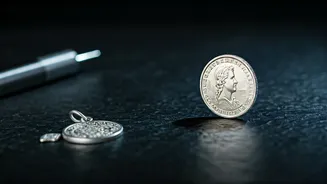
The auditory properties of genuine silver can be telling. Unlike base metals, which produce a dull, flat sound when struck, silver resonates with a clear, melodic tone. To perform this test, balance a silver coin on your fingertip and gently tap it with another coin. A real silver coin will emit a high-pitched, bell-like 'ping' that lingers for a few seconds. For those interested in a more scientific approach, specialized smartphone applications are available that can analyze the precise sound frequency to help authenticate coins.
The Acid Etching
For an irrefutable confirmation, the nitric acid test is employed, though it carries the risk of slightly damaging the item. This method is typically used by professionals. First, create a minuscule scratch on an inconspicuous area of the silver to penetrate any potential plating. Then, apply a single drop of the appropriate testing acid. The resulting color change of the acid is indicative of the silver's purity: a bright red hue signifies pure fine silver, a dark crimson suggests sterling silver, brown indicates 80% silver, and a green reaction points to a base metal or plating. If you are unsure or dealing with valuable heirlooms, it's best to consult a reputable jeweler for a safe, non-destructive analysis, such as an X-ray scan.