





A Home Rooted in Intention
Shaan's Mumbai residence is more than just a dwelling; it's a meticulously crafted triplex that prioritises intention, blending the artist's creative pursuits
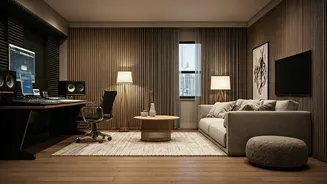
with a nurturing family environment. Upon entering, one is struck not by ostentatious displays of wealth, but by a deliberate and thoughtful design. The interior boasts a harmonious palette of earthy tones and layered textures, creating distinct zones that cater to both work and relaxation, ensuring the space feels genuinely lived-in and welcoming rather than merely curated for show. The foundational philosophy of the home is beautifully encapsulated by a displayed quote: “Family makes this house a home,” a sentiment that permeates the very architecture, from intimate seating nooks to an open dining area designed to encourage familial interaction and togetherness. The triplex layout itself supports this rhythm, as Shaan explains, it includes a duplex living space and a dedicated studio on a separate floor, allowing different levels to serve distinct emotional and functional purposes within the household.
The Heart of the Home: Family's Touch
The soul of Shaan's Mumbai triplex is undeniably shaped by his wife, Radhika Mukherjee, whose artistic vision has infused the home with its distinctive personality. Farah Khan, during a home tour, rightly acknowledges Radhika’s significant contribution, stating, “Radhika, you have done a stunning job.” This sentiment highlights the collaborative and evolving nature of the home's design. Rather than aiming for a static perfection, the family embraces an ethos of continuous adaptation. Their son points out this dynamic aspect, noting, “Very complicated. Because mom is always changing something in the house,” underscoring a living space that gracefully evolves over time. This approach ensures that the home remains fresh and responsive to the family's changing needs and moods, fostering a sense of ongoing renewal and engagement with their surroundings. This constant, yet intentional, evolution is key to its enduring appeal and comfort.
Creativity Woven In
The design of Shaan's Mumbai triplex masterfully integrates creative pursuits into the fabric of daily life, blurring the lines between professional and personal spaces in a way that feels entirely natural and organic. The residence features a dedicated music studio, a sanctuary for Shaan and his sons to pursue their artistic passions. Complementing this is a series of more casual areas thoughtfully designed to harmonise work and leisure, allowing for seamless transitions between focused creative sessions and relaxed downtime. This thoughtful integration ensures that the home environment actively supports and inspires artistic endeavours without imposing rigid boundaries. It fosters a flow state where inspiration can strike at any moment, whether in a professional studio or a comfortable living area, making the act of creation an intrinsic part of the home's atmosphere and the family's lifestyle.
Psychology of Warmth and Safety
According to Sonal Khangarot, a licensed rehabilitation counsellor and psychotherapist, homes that embrace warmth, earthy tones, and communal family spaces significantly enhance feelings of safety, both sensorially and emotionally. Colours derived from nature, such as browns, beiges, and muted greens, are instinctively perceived by the brain as familiar and non-threatening, which plays a crucial role in regulating the nervous system and lowering overall stress levels. Khangarot further emphasizes the importance of shared areas, noting that when families naturally converge in common spaces, it naturally cultivates more opportunities for connection, even through simple, everyday interactions. These recurring moments of togetherness build predictability and a sense of belonging, both vital elements for emotional security. The addition of warm lighting and softer textures further reduces sensory overload, allowing for easier relaxation. Over time, such environments train the mind to associate home with tranquility, rejuvenation, and support, rather than tension or isolation, demonstrating how intentional design profoundly impacts an individual's sense of security.
The Evolving Home Dynamic
From a psychological standpoint, Khangarot explains that homes that are in a state of constant evolution can be both invigorating and unsettling, with the impact largely dependent on the frequency, intention behind the changes, and an individual's inherent need for stability. Moderate, deliberate alterations, like refreshing decor or repositioning furniture, can indeed boost mental engagement, spark creativity, and instill a sense of renewal. The introduction of novelty effectively activates the brain's reward pathways, which can elevate mood and alleviate monotony. However, when modifications become too frequent or lack a coherent pattern, they can undermine an individual's internal sense of steadiness. Humans rely on consistent environmental cues to feel anchored; a continuously shifting living space can subtly signal unpredictability, potentially leading to restlessness or even mild anxiety, particularly for those who are more sensitive to change. Khangarot concludes that the ideal scenario involves finding a balance—maintaining a stable 'emotional anchor' within the home, such as cherished familiar spots or personal mementos, while incorporating periodic updates. This approach ensures the home remains both engaging and reassuring, supporting psychological comfort without sacrificing the stimulation that keeps life interesting.