






Regenerative Medicine's Leap
The persistent struggle with receding hairlines, often met with a variety of products and procedures, may soon have a revolutionary biological solution.
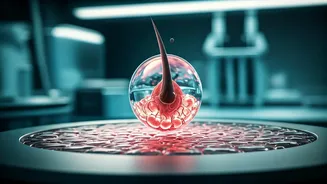
Researchers have achieved a monumental stride in regenerative medicine by growing complete, functional hair follicles entirely within a laboratory environment. Astonishingly, these lab-cultivated follicles exhibit the same natural growth phases that characterize hair on a living person. While immediate human application is still some way off, the implications are vast. In the short term, these lab-grown strands will serve as invaluable tools for testing new hair-loss therapies and unraveling the intricate mechanisms of hair growth initiation and cessation, thereby reducing the reliance on animal models. The long-term vision is even more compelling, with companies like OrganTech aiming to scale this three-cell bioengineering strategy for permanent hair transplant solutions.
The Missing Scaffolding
The breakthrough in cultivating functional hair follicles was made possible by identifying and incorporating a critical missing element: accessory mesenchymal cells. Previously, attempts to grow follicles in vitro primarily utilized epithelial stem cells for hair shaft formation and dermal papilla cells for growth signaling. However, these two components alone were insufficient to trigger actual sprouting and tissue integration, necessitating surgical transplantation into a host. The key insight was recognizing the need for a physical support system during follicle development. By introducing these specialized mesenchymal cells early in the process, they act as a microscopic 'scaffolding,' enveloping the follicle's bulge and dermal sheath. This structural support enabled the follicles not only to survive but to progress through their natural growth cycles and establish connections with surrounding tissues, all within the controlled environment of the lab, without any need for a living organism.
From Mice to Humans
Before celebrating the imminent end of baldness, it's crucial to temper expectations with scientific reality. The significant advancements described were achieved using mouse models, a common and effective first step in biological research. However, human biology is considerably more complex, and translating findings from mice to humans involves a rigorous and lengthy process. The journey from a successful mouse trial to a safe and effective treatment for human baldness, requiring FDA approval, necessitates extensive research using humanized models and comprehensive clinical trials. Therefore, while the scientific foundation for a potential cure is now firmly established, a readily available, over-the-counter solution for human hair loss remains several years in the future. The successful orchestration of cells to create functional mini-organs like hair follicles also opens doors to regenerating larger organs in the future.