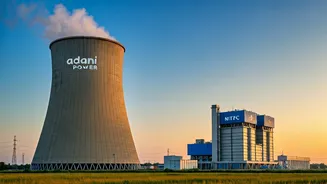








Market Position Defined
NTPC, a government-owned entity, has historically been a key player in India's power generation, operating numerous power plants across the country. Adani
Power, on the other hand, has rapidly expanded its presence through strategic acquisitions and greenfield projects. The market capitalization provides insights into the scale of operations and investor confidence. NTPC typically boasts a larger market capitalization, reflecting its established presence and stable operations. However, Adani Power's market capitalization reflects its growth trajectory and aggressive expansion plans. NTPC's strong track record and government backing often provide a level of stability. Adani Power's focus on efficiency and diversification can lead to higher growth potential. Investors often weigh these factors when deciding between the two.
Financial Health Reviewed
Financial stability plays a crucial role in the sustainability and expansion capabilities of power companies. The revenue and profit margins serve as key indicators of financial health. NTPC, with its extensive network and long-term power purchase agreements, often demonstrates consistent revenue streams. Adani Power, while also reporting substantial revenues, can exhibit variations based on its project timelines and market conditions. The debt-to-equity ratio reflects the leverage and financial risk undertaken by the company. NTPC tends to maintain a moderate debt-to-equity ratio due to its established infrastructure and prudent financial management. Adani Power's leverage can be higher, reflecting its growth-oriented strategies and investments in new projects. Profit margins provide insights into efficiency and cost control. NTPC's margins reflect its operational efficiency and economies of scale. Adani Power's margins can fluctuate based on market dynamics and fuel costs. Analyzing these financials gives a comprehensive view of the companies' fiscal fitness.
Operational Efficiency Studied
Operational efficiency is vital in the power sector, influencing production costs and profitability. The plant load factor (PLF) measures the efficiency of power plant utilization. NTPC, with its well-maintained plants and efficient operations, often achieves a high PLF. Adani Power's PLF can vary depending on plant age, fuel availability, and operational strategies. Fuel sourcing, including coal, is another critical component. NTPC, with its access to domestic coal and diversified fuel sources, manages fuel costs more effectively. Adani Power often faces challenges in fuel procurement due to its reliance on imported coal and fluctuating prices. The transmission and distribution (T&D) losses also have an impact on efficiency. NTPC, with its strategic alliances with state power utilities, can better manage T&D losses. Adani Power’s T&D losses can impact its overall profitability.
Growth and Expansion Explored
Future growth and expansion plans can define the long-term prospects of power companies. NTPC's expansion includes plans for new power plants and renewable energy projects. These projects often include government support and established infrastructure. Adani Power’s expansion is more focused on strategic acquisitions and expanding its existing capacity. Both companies are investing in renewable energy projects to meet growing demand and diversify their portfolios. The focus on renewable energy aligns with the government’s goals and changing market dynamics. The speed and effectiveness of these expansion initiatives will significantly impact their market positions in 2026. Investors look at how well each company is adapting to the ever-evolving energy landscape.
Regulatory Framework's Influence
The regulatory landscape in India’s power sector has a significant impact on operations and financial performance. Government policies, including tariffs and subsidies, can influence the profitability and competitive landscape. NTPC benefits from government support and long-term power purchase agreements. Changes in government policies can impact the operating environment for both companies. Regulatory risks such as delays in approvals and changes in tariff structures can affect profitability. Adani Power and NTPC both face the challenges and benefits of operating within a regulated market. Monitoring policy changes and regulatory compliance is an essential part of the business strategy for both entities. The extent of these risks and how each company navigates them will play a role in their future successes.
Technological Advancements Examined
Technological advancements and innovation are transforming the power sector. The adoption of smart grids and energy storage systems can improve efficiency and reduce costs. NTPC has been investing in modern technologies to enhance its operations and reduce losses. Smart grid deployment is a key area for efficiency gains. Adani Power's investments in cutting-edge technologies are designed to increase efficiency and competitiveness. The implementation of digital solutions and data analytics for operations and maintenance can optimize performance. Innovation and technological capabilities will significantly affect operational efficiency. Both Adani Power and NTPC are actively adapting to technological advances to improve their positions.
Risk Analysis Undertaken
Each company faces specific risks that can influence its performance. NTPC’s risks include regulatory changes, fuel price volatility, and project delays. Economic downturns could impact demand for electricity. Adani Power faces challenges related to debt levels, project execution, and fuel procurement. Market risks such as fluctuations in coal prices and currency rates can also impact earnings. Environmental risks, including climate change and emissions regulations, affect both companies. Both firms must take proactive measures to mitigate these risks. Comprehensive risk analysis is crucial for investors to understand the potential downsides.
Investment Perspectives Evaluated
Investors look at several factors when choosing between Adani Power and NTPC. NTPC is often favored for its stable returns, government support, and established infrastructure. This approach can be attractive for risk-averse investors. Adani Power is often considered by investors looking for high growth potential and greater returns. The company’s focus on growth and aggressive strategies makes it attractive for those seeking high-yield investments. The comparison of these factors, along with individual risk tolerance, guides investment decisions. Financial analysts’ recommendations and market trends also play a key role. Investment decisions should be based on a thorough understanding of each company's strengths and potential risks.