







The Resilient Camel
Often hailed as the 'ship of the desert,' the camel is supremely equipped for arid, scorching environments. Its iconic hump doesn't store water but rather
fat, a vital energy reserve when food is scarce, allowing it to endure extended periods without sustenance. Camels can tolerate significant dehydration and go for days without drinking. Further protection comes from specialized eyelashes and nostrils that can seal shut, shielding them from the abrasive desert winds and blowing sand.
Fennec Fox's Big Ears
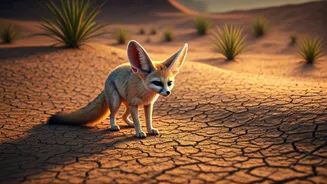
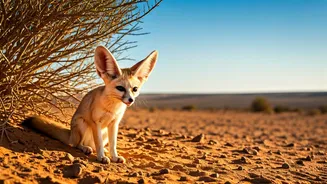
The fennec fox, a resident of the vast Sahara Desert, is instantly recognizable by its disproportionately large ears. These impressive appendages serve a crucial thermoregulation function, acting as radiators to dissipate excess body heat and maintain a stable internal temperature. Its light-colored fur is equally advantageous, reflecting the intense solar rays during the day and providing warmth during cooler desert nights. Primarily nocturnal, this agile fox conserves energy by avoiding the midday sun and hunts during the more temperate hours after dusk.
Kangaroo Rat's Water Wisdom
Despite its name, the kangaroo rat is not closely related to marsupials. This diminutive desert rodent, found in the arid landscapes of North America, possesses an extraordinary ability to survive without ever drinking water directly. It ingeniously extracts all necessary moisture from the seeds and plants it consumes. Its physiological marvel lies in its highly efficient kidneys, which meticulously conserve every possible drop of water, minimizing excretion. To further escape the heat, it spends its days in the cool safety of underground burrows, emerging only when temperatures are more forgiving.
Ostrich's Cooling Feathers
Africa's ostrich, the largest bird on Earth, flourishes in the hot savannahs and expansive dry regions. This magnificent creature has developed sophisticated mechanisms for managing extreme heat. Its long, powerful legs enable it to traverse considerable distances in search of sustenance and water with remarkable energy efficiency. Furthermore, its unique feather structure plays a vital role in temperature regulation, trapping a layer of cool air close to its skin, providing an insulating buffer against the searing sun.
Desert Tortoise's Burrow Life
The desert tortoise is a paragon of slow, deliberate survival in harsh, arid environments. This reptile spends the majority of its existence within the protective confines of subterranean burrows, where ambient temperatures remain significantly lower than the surface. It possesses the remarkable capacity to store water within its body, allowing it to endure prolonged periods without access to fresh water sources. During periods of extreme heat, it conserves vital energy and moisture by drastically limiting its physical activity, effectively avoiding the risk of overheating.
Meerkat's Sun-Proof Vision
Meerkats, renowned for their vigilant upright posture as they survey their surroundings, are exceptionally well-adapted to the hot, dry terrains of southern Africa. They inhabit intricate networks of underground burrows that maintain a cool microclimate, even when surface temperatures are extreme. A distinctive feature contributing to their survival is the dark pigmentation around their eyes, which functions much like built-in sunglasses, effectively reducing glare and allowing them to see clearly under the intense, unrelenting sunlight of their habitat.
Thorny Devil's Moisture Collection
This extraordinary lizard, the thorny devil, thrives in some of the planet's most intensely hot desert landscapes in Australia. Its body is covered in a unique array of sharp spines, which serve a crucial purpose beyond defense. These spines facilitate the collection of moisture, channeling dew or infrequent rainfall directly towards the lizard's mouth. Its specialized skin is also capable of absorbing minuscule amounts of water, a vital adaptation that enables its survival in regions characterized by extremely low precipitation.
Elephant's Gigantic Coolers
African elephants, while seemingly robust, possess an impressive ability to cope with significant heat. Their enormous ears are not just for hearing; they function as highly effective natural radiators, dissipating excess body heat into the surrounding air. To further regulate their temperature, elephants frequently engage in cooling activities such as rolling in mud, showering with dust, and seeking out water sources. Their daily routines also adapt to the weather, with increased activity often observed during the cooler parts of the day.